 Save
Save There's something almost meditative about watching butternut squash transform in the oven—the way the edges caramelize and the whole kitchen fills with this deep, honeyed sweetness that makes you forget it's actually November outside. I discovered this soup on a grey afternoon when I had a squash sitting on my counter and absolutely nothing else appealing in the fridge. What started as an improvisation became the thing I make whenever I need to feel both nourished and comforted, without any fuss.
I made this for my sister during a surprise visit, and she sat at my kitchen counter with a spoon halfway to her mouth, just quiet for a moment. That's when I knew the recipe was worth keeping—when food stops being about hunger and becomes about connection. She asked for seconds before I'd even cleared her first bowl.
Ingredients
- Butternut squash (1 medium, about 1.2 kg): Roasting brings out its natural sweetness and creates a deeper flavor than boiling ever could.
- Onion and carrots: These are your flavor foundation—the onion melts into sweetness while the carrots add earthiness and body.
- Garlic: Just two cloves, but they anchor the whole soup with subtle warmth rather than overpowering it.
- Vegetable stock (800 ml): Use good quality if you can; it's the backbone that carries all those roasted flavors.
- Coconut milk (200 ml): This adds richness and a silky finish—if you prefer dairy, heavy cream works beautifully instead.
- Olive oil (2 tbsp): One tablespoon goes with the squash for roasting, the other for sautéing the vegetables.
- Ground cumin and nutmeg: Cumin adds warmth, nutmeg brings sophistication—together they're barely noticeable but completely essential.
- Salt and black pepper: Taste as you go; the soup will taste flat without proper seasoning at the end.
- Fresh parsley or coriander, toasted pumpkin seeds, and cream swirl: These garnishes aren't fancy extras—they add texture and brightness that makes each spoonful interesting.
Tired of Takeout? 🥡
Get 10 meals you can make faster than delivery arrives. Seriously.
One email. No spam. Unsubscribe anytime.
Instructions
- Roast your squash until it's golden:
- Preheat your oven to 200°C (400°F) and toss your diced squash with a tablespoon of olive oil, salt, and pepper. Spread it on a baking tray and let it roast for 25 minutes until the edges are caramelized and the flesh is completely tender—this is where the magic happens.
- Build your vegetable base:
- While the squash roasts, heat the remaining oil in a large pot over medium heat and sauté your onion and carrots for 5 to 7 minutes until they soften and start to smell incredible. You're not looking for color here, just for them to become tender and release their sweetness into the oil.
- Wake up the spices:
- Add your minced garlic, cumin, and nutmeg to the pot and let them cook together for just one minute until the kitchen smells like a warm hug. This brief cooking time mellows the garlic so it doesn't bite, and lets the spices bloom without burning.
- Bring everything together:
- Add your roasted squash to the pot along with the vegetable stock, bring it to a boil, then turn the heat down and simmer gently for 10 minutes. This allows all the flavors to know each other and meld into something cohesive.
- Purée into silky smoothness:
- Using an immersion blender directly in the pot, purée the soup until it reaches that luxurious velvety texture—if you're using a regular blender, work in careful batches so nothing splatters. You want absolutely no lumps; this soup is about silk and comfort.
- Finish with cream and seasoning:
- Stir in your coconut milk or cream and heat the soup gently without letting it boil. Taste it now and adjust your salt and pepper—this is crucial because seasoning at the end is what transforms it from good to memorable.
- Serve with intention:
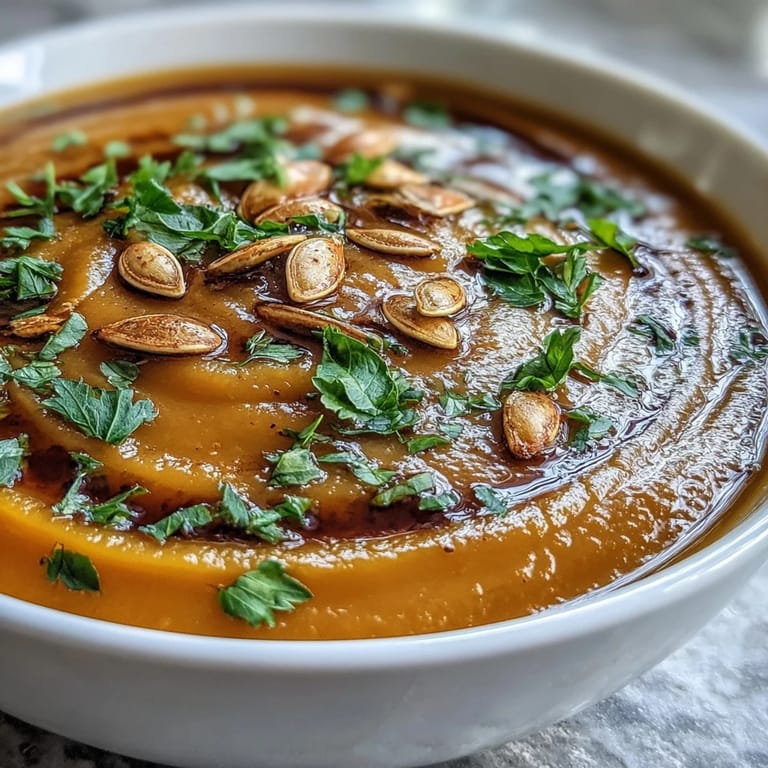
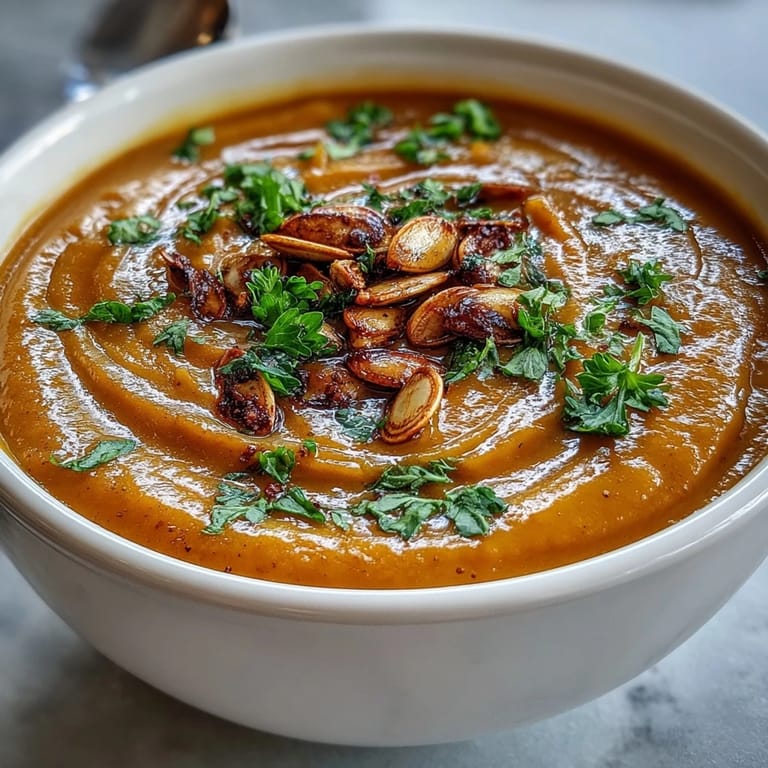
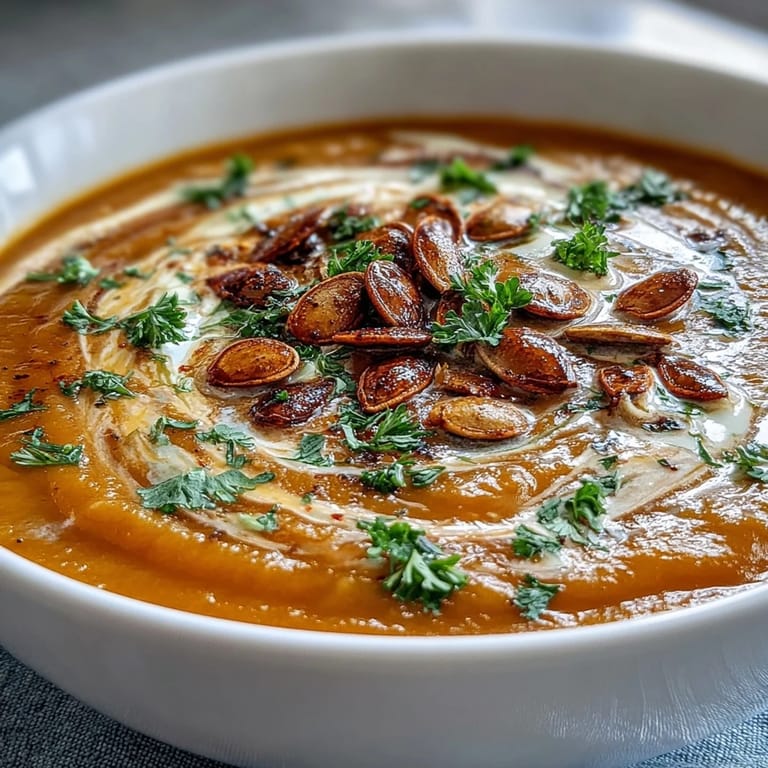
- Ladle the soup into bowls and crown each one with fresh herbs, a scatter of toasted pumpkin seeds, and perhaps a delicate swirl of cream across the top. The garnish isn't decoration; it's the textural and flavor finale.
 Save
Save There was a moment when I added the coconut milk and watched it swirl into the orange soup, creating these beautiful marble patterns, and I realized why people love cooking so much. It's these small, almost silent moments where something plain becomes something that feels a little bit luxurious.
The Roasting Advantage
Roasting the squash instead of boiling it is the decision that separates an ordinary soup from one that tastes like you know what you're doing. The dry heat concentrates the squash's natural sugars and creates caramelization on the edges, which adds depth and complexity that liquid cooking simply cannot achieve. It's the kind of technique that seems small until you taste the difference.
Spice Wisdom
Cumin and nutmeg sound like an unusual combination when you're reading the ingredient list, but they work in whispered harmony rather than bold declaration. The cumin adds a subtle earthiness that grounds the soup's sweetness, while the nutmeg brings a barely-there elegance that makes people wonder what makes this soup taste so sophisticated. Neither spice should announce itself; together they simply make everything taste better.
Make It Your Own
This soup is infinitely adaptable once you understand its foundation. I've made it with sage instead of cilantro, added a pinch of smoked paprika for depth, and once even stirred in crispy sage leaves right at the end because I had them and felt experimental. The beauty of a simple, well-balanced soup is that it welcomes your creativity without demanding it.
- If you want extra warmth and a subtle kick, add a pinch of chili flakes or a tiny pinch of cayenne while sautéing the vegetables.
- Swap the coconut milk for heavy cream if you prefer a richer, less tropical finish, or use half milk and half cream if you're looking for something in between.
- Serve it alongside crusty bread that you can tear into, or pair it as the opening to a more elaborate meal—it sets an elegant tone without stealing the spotlight.
 Save
Save Butternut squash soup is the kind of recipe that becomes a ritual, not just a meal. It's proof that simplicity and care create something memorable.
Questions & Answers
- → How long does butternut squash soup keep?
This soup stores well in the refrigerator for 4-5 days in an airtight container. The flavors often develop and improve after a day. You can also freeze it for up to 3 months—just leave space in the container as liquids expand when frozen.
- → Can I make this soup dairy-free?
Absolutely. Use coconut milk as specified for a naturally dairy-free version with a subtle tropical note. For a neutral dairy-free alternative, try oat milk or cashew cream instead of heavy cream.
- → Why roast the squash first?
Roasting concentrates the natural sugars in butternut squash, creating deeper caramelized flavors that boiling alone cannot achieve. This extra step results in a more complex, rich-tasting soup with better depth.
- → What can I serve with butternut squash soup?
Crusty bread, garlic knots, or a warm baguette make perfect accompaniments for dipping. For a complete meal, pair with a simple green salad with vinaigrette or a grilled cheese sandwich with sharp cheddar.
- → How can I make this soup spicier?
Add a pinch of red pepper flakes when sautéing the vegetables, or stir in a small amount of harissa paste or sriracha at the end. Freshly grated ginger also adds warming heat that complements the squash beautifully.
- → Can I use frozen squash?
Yes, frozen butternut squash cubes work well—though roasting times may be slightly shorter since frozen squash is typically pre-blanched. Simply toss with oil and roast until golden and tender at the edges.