 Save
Save My aunt served Eggs Benedict at her kitchen table one Sunday morning, and I watched her move between the stove and counter with this calm confidence I'd never seen before—whisking butter into egg yolks like she was conducting a small, delicious orchestra. The hollandaise broke once (she laughed, started over), the eggs poached perfectly on the second attempt, and by the time everything hit the plate, I understood why people save this dish for mornings that matter. There's something about layering all these components together that feels both fancy and deeply comforting, like you're doing something special without needing anyone's permission.
I made this for Mother's Day last year, and my mom sat at the table with her hands wrapped around the coffee cup, not saying much, just observing as I plated everything. When that hollandaise cascaded over the egg and it started running into all the right places, she smiled in a way that made the whole 40 minutes of timing and whisking absolutely worth it. That's when Eggs Benedict stopped being a recipe and became something I make when I want someone to know they're worth the effort.
Ingredients
- English muffins: Split and toasted until they're golden and sturdy enough to hold the weight of everything stacked on top without falling apart.
- Canadian bacon: The thin slices make a difference—they warm through quickly and don't overwhelm the delicate egg and sauce.
- Large eggs: Fresh eggs poach better because the whites cling to the yolk instead of spreading into wispy threads.
- White vinegar: Just a tablespoon keeps the egg whites from dispersing into the water, and it's worth using real vinegar, not the cheap stuff.
- Egg yolks for hollandaise: This sauce is pure emulsion—yolk, lemon, butter—and it's easier than you think if you whisk slowly and don't panic.
- Unsalted butter: Melted and warm means it combines smoothly; if it's too hot it scrambles the yolks, too cool and it won't blend.
- Lemon juice: Freshly squeezed makes a real difference in brightness and helps stabilize the sauce without overpowering it.
- Cayenne pepper: A tiny pinch adds warmth and complexity that nobody can quite name but everyone notices.
- Chives or parsley: A sprinkle of fresh green at the end makes it look intentional and tastes sharp against all that richness.
Tired of Takeout? 🥡
Get 10 meals you can make faster than delivery arrives. Seriously.
One email. No spam. Unsubscribe anytime.
Instructions
- Make the hollandaise first:
- Set a heatproof bowl over simmering water (the bowl shouldn't touch the water) and whisk your egg yolks with lemon juice until they're pale and slightly thickened. This takes patience, maybe 2-3 minutes of constant whisking. Slowly drizzle in your warm melted butter while whisking constantly—if you pour too fast it breaks, so go steady and breathe.
- Season and keep it safe:
- Once it's thick and glossy, remove from heat, season with salt and cayenne, then cover loosely and set it somewhere warm but not hot (a turned-off oven works). The sauce is delicate and will break if it gets too hot.
- Warm the Canadian bacon:
- In a skillet over medium heat, give each slice just 1-2 minutes per side until it's warmed through and lightly browned at the edges. Set it aside on a clean plate and keep it warm.
- Poach the eggs with intention:
- Fill a saucepan with water, bring it to a gentle simmer (not a rolling boil—this is important), and add a splash of white vinegar. Crack one egg into a small bowl, swirl the simmering water gently to create a small whirlpool, then slide the egg into the center. Let it cook for 3-4 minutes until the white is set but the yolk still moves slightly when you nudge it with a spoon.
- Cook in batches if needed:
- You can poach 2-3 eggs at a time, but don't crowd the pan or they'll stick together. Remove them with a slotted spoon and let them drain briefly on paper towels.
- Assemble with purpose:
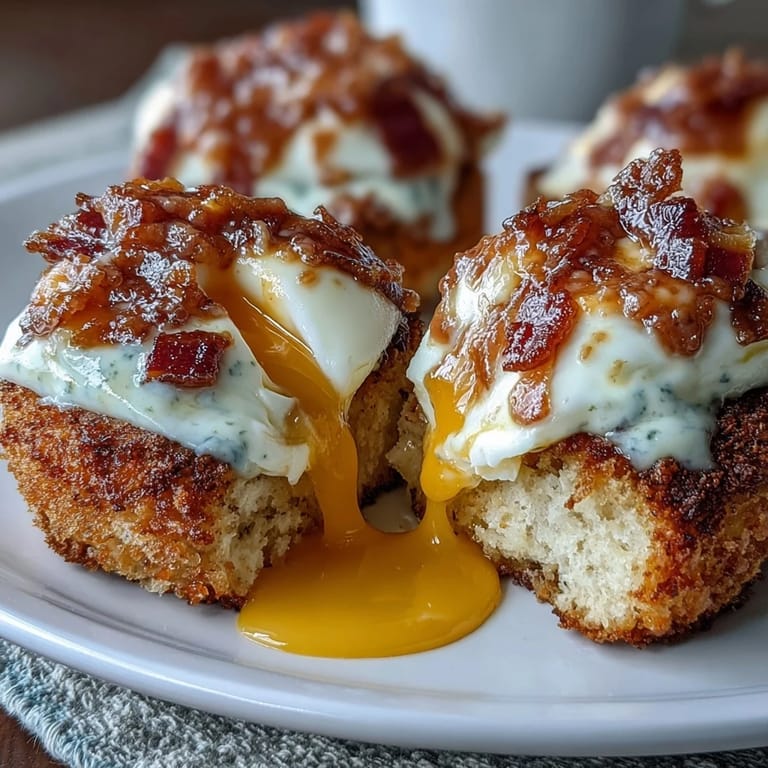
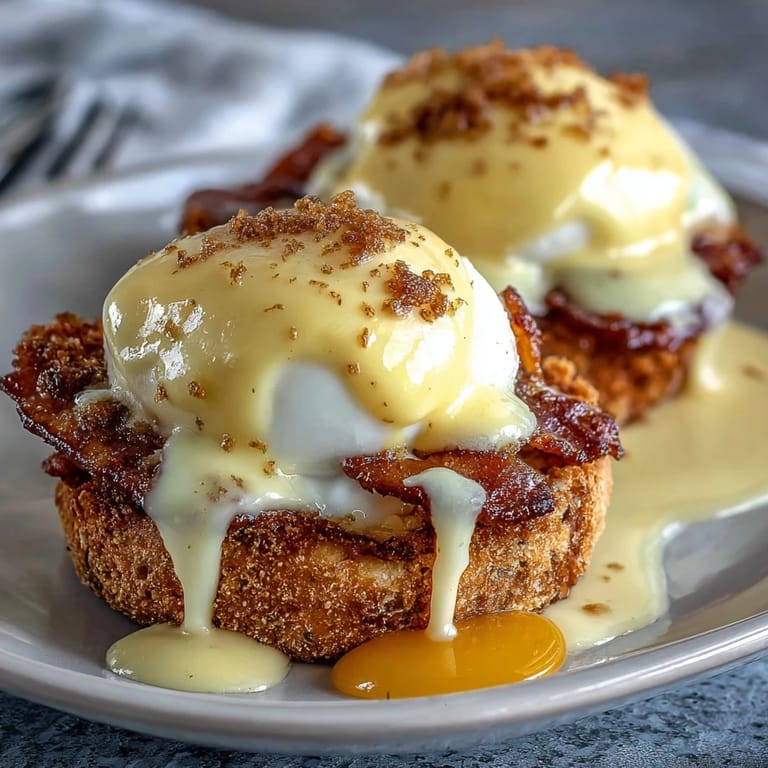
- Place two toasted muffin halves on each plate, top each with a slice of Canadian bacon, then your poached egg. Spoon the hollandaise generously over the top—this is not the moment for restraint. Finish with a sprinkle of chives and a grind of black pepper.
 Save
Save There's a specific quiet that happens when everything times right—when you're plating and the hollandaise is still warm, the eggs are still warm, the muffins are still warm, and it all comes together in one synchronized moment. That's the real magic of Eggs Benedict, more than the ingredients themselves.
The Architecture of Layers
What makes Eggs Benedict work isn't any single component—it's how they stack. The toasted muffin gives you structure and a little crunch; the Canadian bacon adds salt and smoke; the poached egg is the silky center that everything revolves around; and the hollandaise is the glue that ties it all together. I used to think hollandaise was the fancy part, the thing that made it special, but really it's the way all four elements talk to each other. Miss one temperature or texture and the whole thing feels off.
Timing Is Everything
This is a dish where multitasking actually matters because everything needs to be warm and ready at the same moment. I learned this by making it early morning, letting components cool, and then trying to reheat everything, which just made the eggs rubbery and the hollandaise grainy. Now I prep ingredients first, get water simmering, make the hollandaise while bacon cooks, then poach the eggs last so everything comes together in those final few minutes.
Beyond the Classic
Once you master the basic version, you can play with variations—spinach underneath instead of bacon (Eggs Florentine), sliced avocado (Eggs California), smoked salmon (Eggs Royale)—and the technique stays exactly the same. The hollandaise and poaching method are the real skills; everything else is just choosing what flavors you want that day. I've made this dish different ways for different people, and every version feels a little like you're making something just for them.
- Make the hollandaise ahead if you're nervous about timing, then keep it warm in a thermos or covered bowl over warm water while you poach.
- If you don't have Canadian bacon, any thin, flavorful cured meat works, or go vegetarian with sautéed spinach or roasted tomatoes.
- Serve immediately because these components cool fast, and reheated Eggs Benedict is never quite the same.
 Save
Save Eggs Benedict is one of those dishes that rewards you for paying attention, for timing things carefully, and for understanding why each step matters. Make it once and you'll always know how.
Questions & Answers
- → How do I poach eggs perfectly for this dish?
Use simmering water with a splash of vinegar to help the egg whites set. Gently slide eggs in without breaking yolks and cook 3–4 minutes for soft yolks.
- → What is the best way to keep hollandaise sauce smooth?
Prepare over gentle heat using a double boiler and whisk constantly. Keep warm but avoid overheating to prevent curdling.
- → Can I substitute the Canadian bacon?
Yes, spinach or avocado can replace bacon for a vegetarian-friendly variation that still complements the poached eggs and sauce.
- → How should I toast the English muffins?
Split the muffins and toast until golden and crisp to provide a sturdy base that holds the toppings well.
- → What garnishes enhance the flavor of this dish?
Fresh chopped chives or parsley add a subtle herbal note and a pop of color to complement the richness of the sauce.