 Save
Save There's something about the first warm evening of spring that makes you crave something both elegant and comforting, and that's exactly when I discovered panna cotta. A friend served it at a garden dinner, and I watched as everyone at the table paused mid-conversation the moment it touched their lips. The texture was impossibly silky, and the lavender gave it this subtle sophistication that felt nothing like an everyday dessert. I asked for the recipe that night, and honestly, it became my go-to for impressing people without spending hours in the kitchen.
I made this for my sister's birthday dinner last April, and I remember standing at the stove listening to her and her husband laughing in the living room while the cream warmed and the lavender bloomed. The kitchen smelled absolutely incredible, like a fancy hotel spa had moved into my house. When I served them, there was this beat of silence before anyone spoke, and then my sister said it tasted like spring in a spoon. That's when I knew I'd gotten it right.
Ingredients
- Heavy cream: This is the foundation of everything—don't skimp on quality here because you'll taste the difference in that silky texture.
- Whole milk: It balances the richness of the cream and keeps things from feeling too heavy, which I learned after making a version that was almost too decadent.
- Honey: Look for something you actually enjoy eating on its own, because that flavor will shine through beautifully.
- Dried culinary lavender: This is crucial—make sure it says edible or culinary, not the kind meant for sachets or crafts.
- Pure vanilla extract: A small amount but it ties everything together, so don't use the imitation stuff.
- Unflavored powdered gelatin: This sets the whole dessert without adding any flavor of its own, which is exactly what you want.
- Cold water: For blooming the gelatin, and this step truly matters because it helps the gelatin distribute evenly.
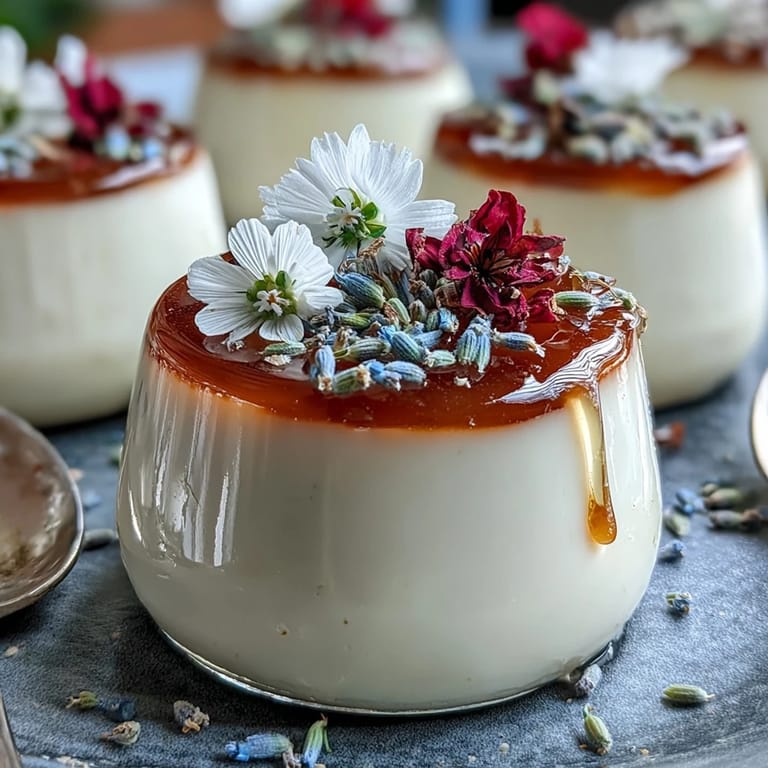
- Fresh edible flowers and berries: Optional but they turn this into something you'd see at a real restaurant, so if you can find them, do it.
Tired of Takeout? 🥡
Get 10 meals you can make faster than delivery arrives. Seriously.
One email. No spam. Unsubscribe anytime.
Instructions
- Bloom your gelatin:
- Sprinkle the gelatin over cold water in a small bowl and just let it sit for 5 minutes—it'll look like sand absorbing water, which is exactly what you want. This step prevents lumps later, so don't skip it even though it feels like nothing's happening.
- Infuse the cream and milk:
- Combine the cream, milk, honey, and dried lavender in a medium saucepan and heat gently over medium-low heat until it's just steaming—you'll see a wisp of steam but no actual bubbles. Stir occasionally so the honey dissolves evenly, then remove from heat, cover it, and let it sit for 10 minutes while the lavender releases all its flavor into the cream.
- Strain away the lavender:
- Pour everything through a fine-mesh sieve into a clean bowl, pressing gently on the lavender with the back of a spoon to extract any remaining liquid. Return the strained mixture to the saucepan—you've just created the perfect base.
- Dissolve the gelatin:
- Add your bloomed gelatin to the warm cream mixture and stir until it's completely dissolved and you don't see any grainy bits. Stir in the vanilla extract and taste it if you'd like—adjust the honey if it needs more sweetness, though remember it'll be less sweet once chilled.
- Pour and cool:
- Divide the mixture evenly among your 4 ramekins or glasses, trying to give each one the same amount so they set at the same pace. Let them cool to room temperature on the counter, then cover them loosely and move to the refrigerator.
- Chill and set:
- Give them at least 4 hours to set completely, though overnight is even better if you have the time. You'll know it's ready when it jiggles just slightly when you gently shake the ramekin, not when it's completely firm.
- Serve with intention:
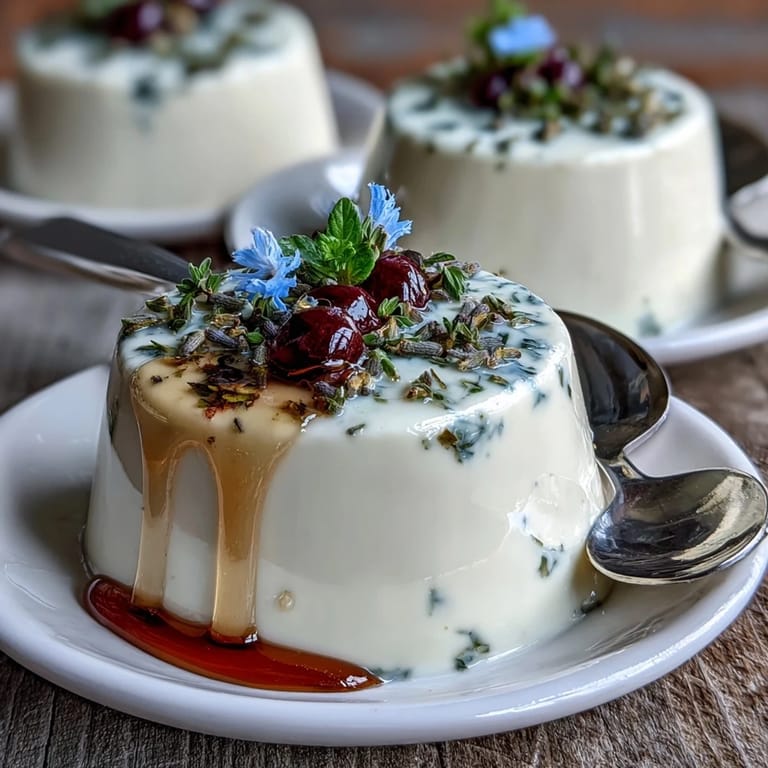
- If you want to unmold them, run a thin knife around the edge and invert onto a plate, or just serve them right in the glass with a pretty drizzle of honey and whatever garnish speaks to you. Either way, they deserve a moment before anyone digs in.
 Save
Save What struck me most about making panna cotta regularly is how it became this quiet moment of control in my kitchen. Everything happens at the right temperature, at the right pace, and the result is always this perfect little luxury that feels both effortless and deliberate. It's taught me that sometimes the most impressive dishes are the ones that don't require frantic energy or complicated techniques.
The Magic of Steeping
I learned early on that those 10 minutes of steeping while the saucepan is covered are absolutely non-negotiable. The heat keeps the lavender releasing its flavor without any risk of overcooking, and the cover traps all that aromatic steam so nothing gets lost. It's similar to brewing a perfect cup of tea—patience here transforms dried flowers into liquid silk.
Temperature and Texture Matters
The reason panna cotta feels so luxurious on your tongue has everything to do with that gentle heating. Too hot and the cream breaks down, too cool and you won't get proper dissolution of the gelatin. I think of it as the Goldilocks moment where everything is just right, and that's when magic happens.
Serving Your Panna Cotta
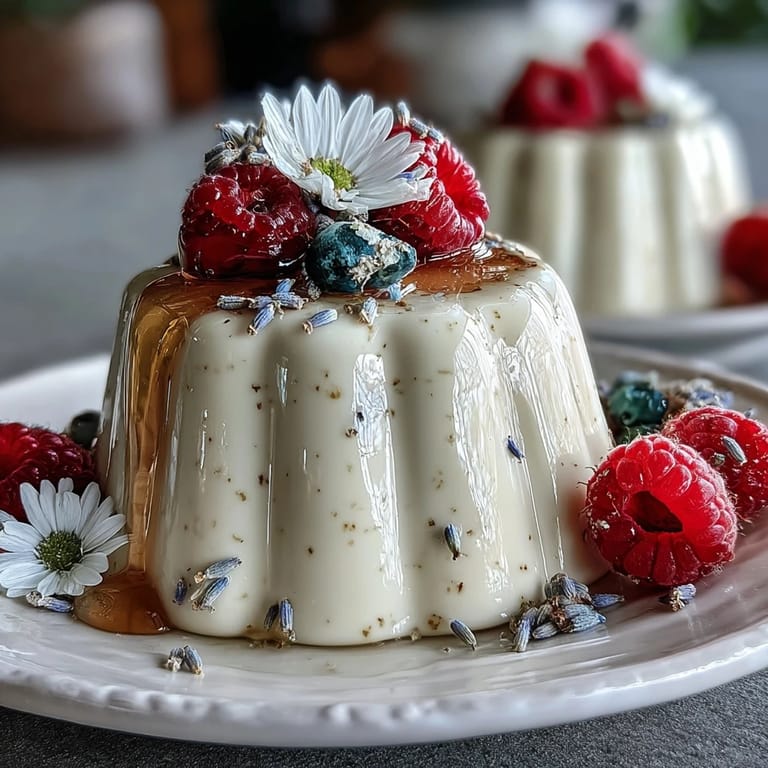
There are two camps here, and both are completely valid. Some people unmold theirs for that restaurant presentation, and others serve them directly in the ramekin because, honestly, who doesn't love eating from a pretty glass? I usually ask my guests which they prefer, and their faces light up either way because they're just happy something this elegant is about to be eaten.
- If unmolding, do it just before serving so it looks its absolute best and the edges are still clean.
- A drizzle of honey and a few edible flowers or berries turns this from lovely to absolutely show-stopping.
- Shortbread cookies on the side add a lovely textural contrast that makes the whole dessert feel complete.
 Save
Save This dessert taught me that simple ingredients treated with care create something that feels far more complicated than it actually is. Make it once and it becomes part of your repertoire forever.
Questions & Answers
- → How do you infuse lavender flavor without bitterness?
Gently heat the cream and milk with dried lavender and honey, then steep off heat for about 10 minutes to extract floral notes without bitterness.
- → Can I substitute gelatin for a vegetarian option?
Yes, agar agar can replace gelatin. Use appropriate quantities and follow instructions to achieve a similar set.
- → What is the best way to unmold the panna cotta?
Run a knife around the edge of each ramekin, then invert onto plates carefully to retain its shape.
- → How can I enhance the floral aroma?
Try using orange blossom honey or increase the steeping time slightly for a more pronounced lavender flavor.
- → What garnishes complement this dessert?
Fresh edible flowers, a drizzle of honey, and fresh berries enhance both appearance and flavor.
- → Is chilling time important for texture?
Yes, chilling for at least 4 hours allows the panna cotta to fully set and develop its creamy texture.