 Save
Save My sister called me in March asking if I could bake something special for her birthday, and without thinking, I said yes to lemon blueberry. She'd mentioned it once in passing months ago, and somehow it stuck with me. That afternoon, I stood in my kitchen with the windows open, spring air drifting in, and I realized I was about to make something that felt like the season itself—bright, hopeful, and a little bit show-offy in the best way. The smell of lemon zest filling the room before the oven even turned on told me this was going to be good.
When I pulled those three layers from the oven and the kitchen suddenly smelled like a lemon grove, my mom wandered in asking what I was making. By the time I'd cooled everything and started frosting, she was sitting at the kitchen counter with her chin in her hand, and we just talked while I worked—about spring, about my sister, about nothing important. That's when I knew this cake was more than just dessert; it was an excuse to slow down.
Ingredients
- All-purpose flour (2 1/2 cups): The backbone of your cake—make sure it's fresh and fluffed before measuring, or you'll end up with a dense crumb instead of the tender layers you want.
- Baking powder and baking soda (2 tsp and 1/2 tsp): These two work together to lift the cake gently, so don't skip the baking soda even though it's a small amount.
- Unsalted butter (1 cup plus 1/2 cup for frosting): Softened to room temperature means it creams properly with sugar, creating that pale, fluffy base that makes a difference you can taste.
- Granulated sugar (1 3/4 cups): The creaming step takes 3-4 minutes and feels long, but that's where the magic happens—tiny air bubbles that make the cake light.
- Eggs (4 large): Room temperature eggs blend smoothly into the batter and don't shock the mixture, which keeps the crumb tender.
- Lemon zest (2 tbsp): Use a microplane and go slow—you want those bright yellow flakes, not the bitter white pith underneath.
- Fresh lemon juice (1/3 cup): Squeeze it yourself if you can; bottled juice tastes tired and flat by comparison.
- Whole milk (1 cup): Room temperature milk combines smoothly with the batter and adds gentle moisture without weighing it down.
- Fresh blueberries (1 1/2 cups): Toss them with 1 tablespoon of flour before folding in—this keeps them from sinking to the bottom, which I learned after one sad, blueberry-light cake layer.
- Cream cheese (8 oz): Must be softened, or your frosting will have lumps that no amount of beating will fix.
- Powdered sugar (3 cups): Sift it before adding or your frosting will taste grainy and feel dense.
- Vanilla extract and salt: These quiet ingredients round out the frosting and keep it from tasting one-dimensional.
Tired of Takeout? 🥡
Get 10 meals you can make faster than delivery arrives. Seriously.
One email. No spam. Unsubscribe anytime.
Instructions
- Set the stage:
- Preheat your oven to 350°F and get three 8-inch cake pans ready with parchment paper—this takes a minute but saves you from sticking disasters later. Having everything ready before you start mixing is the difference between a calm baking afternoon and a rushed scramble.
- Build your dry team:
- Whisk flour, baking powder, baking soda, and salt in a bowl and set it aside so it's ready when you need it. This step feels small, but mixing them together now prevents lumps from hiding in the finished batter.
- The cream and dream:
- Beat softened butter and sugar together for 3-4 minutes until it looks pale and fluffy, like clouds you could actually touch. This is not a step to rush—the air bubbles you're creating right now are what make your cake light and tender instead of dense.
- Add eggs with care:
- Drop in one egg at a time, beating well after each one, then mix in your lemon zest and fresh lemon juice. The bright smell hits you at this moment—that's when you know you're on the right track.
- The three-part dance:
- Alternate adding the flour mixture and milk, starting and ending with flour, mixing gently after each addition until just combined. Over-mixing at this stage toughens your cake, so go slow and know that a few small streaks of flour are actually your friend.
- Blueberry rescue:
- Toss your blueberries with 1 tablespoon of flour, then fold them in gently with a spatula—this simple step keeps them from sinking to the bottom of the pans. I learned this the hard way after my first layer came out with all the berries pooled at the base.
- Into the heat:
- Divide the batter evenly among your three pans, smooth the tops with a spatula, and slide them into the oven for 25-30 minutes until a toothpick comes out clean. The kitchen will smell incredible, and you'll be tempted to peek early—resist, because opening the door cools the oven and can collapse your layers.
- Cool with patience:
- Let the cakes sit in their pans for 10 minutes, then turn them out onto wire racks to cool completely—this prevents them from sticking or breaking. If you try to frost warm cake, the frosting will melt and slide off like you're decorating a melting snowball.
- Frosting magic:
- Beat softened cream cheese and butter together until smooth, then add sifted powdered sugar, lemon juice, vanilla, and salt, beating until fluffy and spreadable. This frosting should be thick enough to hold its shape but soft enough to spread without tearing your cake layers.
- The assembly:
- Place one cake layer on your serving plate, spread frosting generously on top, then repeat with the next two layers before frosting the top and sides. Work confidently but not frantically—frosting cake is one of those tasks that feels easier once you start.
- The final flourish:
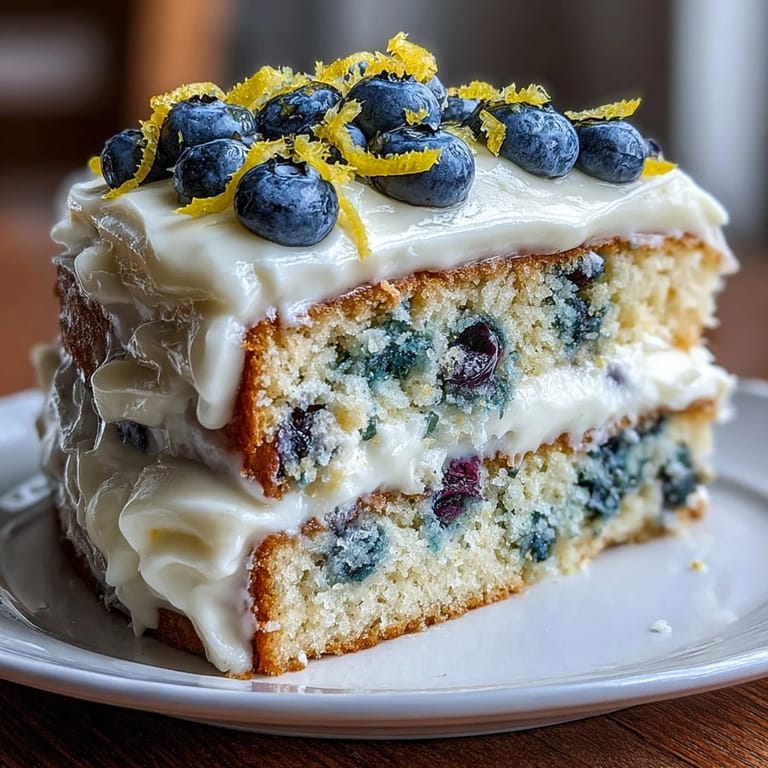
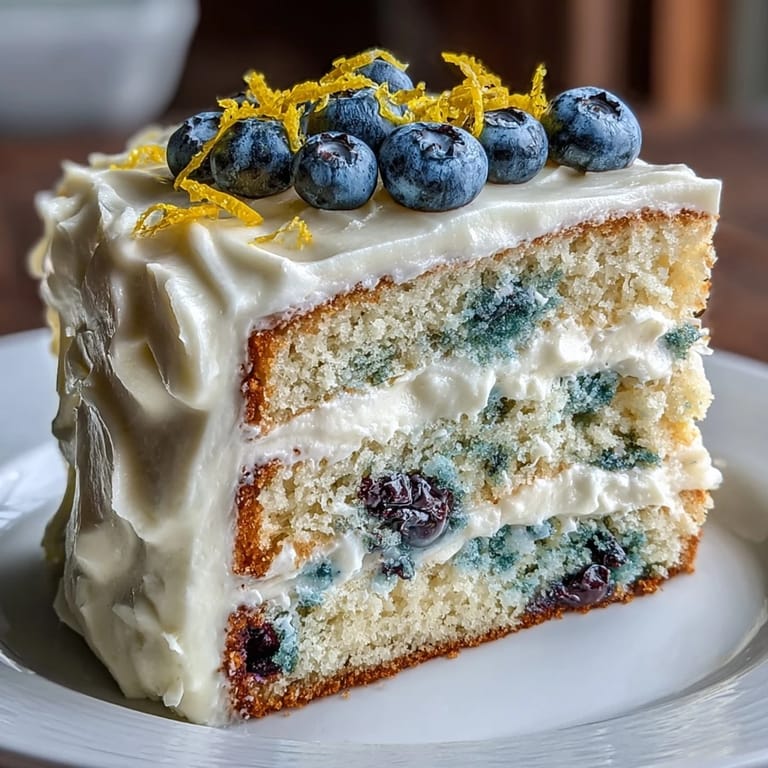
- Crown it all with fresh blueberries, lemon zest curls, and edible flowers if you have them, turning your cake into something that looks like spring tastes. This is where you make it yours—maybe you add edible glitter, maybe you keep it simple and let the berries do the talking.
 Save
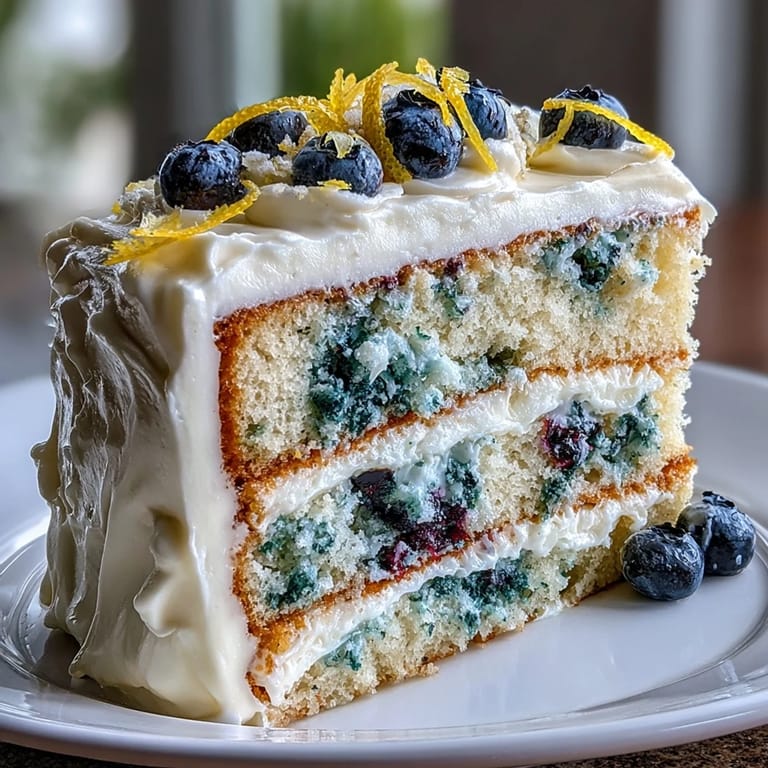
Save When my sister walked into her birthday dinner and saw the cake on the table, she just stopped and looked at it for a moment—three perfect layers, bright berries tumbling down the sides, that golden glow from the lemon. We cut into it and the layers were tender and moist, the frosting tasted like actual lemons, and nobody remembered that I'd been nervous about it that morning. That's when a recipe becomes a memory.
Lemon Flavor That Actually Tastes Like Spring
I used to think lemon cake tasted one-note and artificial until I understood that you need both zest and juice to build the flavor—they work in different ways. The zest gives brightness and aromatic oils, while the juice adds tartness and moisture, and together they create something that tastes fresh instead of like a candle. If you go heavy on just one or the other, you lose that balance, so resist the urge to simplify.
Why Three Layers Instead of Two
Three layers look showier than two, but they're also thinner and bake faster, which means they're less likely to dome or bake unevenly. The real advantage is that three thin layers cool more quickly, so you're not waiting as long before frosting, and they actually taste more tender because less moisture has time to evaporate. Plus, there's something satisfying about that moment when you're stacking them—it feels like you actually accomplished something in the kitchen.
Make-Ahead Magic and Last-Minute Saves
These cake layers freeze beautifully if you wrap them tightly once they're cool, which means you can bake them a day or two ahead and frost when you're ready. The frosting itself keeps in the refrigerator for a couple of days, so most of your stress can be eliminated by doing the work in stages instead of all at once. On the morning of serving, you might brush the layers with a simple lemon syrup—just equal parts lemon juice and sugar heated together—to add extra moisture and flavor that makes the cake taste almost restaurant-quality.
- Cake layers wrapped well can even live in the freezer for up to a month, so baking ahead for an event is totally doable.
- A simple lemon syrup brushed on each layer before frosting transforms good cake into unforgettable cake.
- This cake actually tastes better the next day once the flavors have settled, so don't stress if you're making it ahead.
 Save
Save This cake has become my go-to for spring celebrations, and every time I make it, the kitchen fills with that hopeful lemon smell that makes people smile before they even taste it. Make it for someone you want to impress, or just make it because spring deserves a cake as bright as the season itself.
Questions & Answers
- → How do I keep blueberries from sinking in the batter?
Toss the blueberries in a tablespoon of flour before folding them gently into the batter to help suspend them during baking.
- → Can I prepare the cake layers in advance?
Yes, cake layers can be baked a day ahead, wrapped tightly once cooled, and refrigerated until assembly.
- → What temperature is best for baking this cake?
Preheat the oven to 350°F (175°C) and bake the layers for 25–30 minutes until a toothpick inserted comes out clean.
- → How is the lemon flavor enhanced in this cake?
Fresh lemon zest and juice are incorporated into the batter and frosting, providing a bright, zesty flavor throughout.
- → What tools are needed to make this cake?
You'll need round cake pans, mixing bowls, an electric mixer, whisk, rubber spatula, wire racks, and a zester or microplane.