 Save
Save I discovered roasted cabbage wedges by accident one winter evening when I had half a head of cabbage and absolutely nothing else in the fridge except tahini. What started as a desperate dinner turned into something I now make on purpose, week after week. The way the edges crisp up in the oven while the inside stays tender feels almost magical, and that tahini sauce—silky, nutty, with just enough lemon to sing—transforms simple cabbage into something you'd actually crave. It's become my go-to proof that the plainest vegetables deserve respect and heat.
My friend Sarah turned her nose up when I told her the main was roasted cabbage until she took one bite and immediately asked for seconds. Watching her expression shift from doubt to genuine delight was worth every moment in the kitchen. Now she texts me asking how to make it, which somehow feels like the highest compliment.
Ingredients
- 1 medium green cabbage (about 2 lbs), cut into 8 wedges, core intact: Keeping the core in holds everything together so your wedges don't fall apart in the oven, which I learned the messy way the first time.
- 2 tbsp olive oil: Use something you actually like the flavor of since it matters here.
- 1/2 tsp kosher salt and 1/4 tsp freshly ground black pepper: Season generously before roasting so the flavor gets baked in rather than sitting on top.
- 1/3 cup tahini (sesame seed paste): This is the heart of your sauce, so buy decent tahini if you can, the kind that doesn't separate into a thick sludge the moment you open it.
- 1 small garlic clove, finely grated: Grating releases the oils better than mincing and makes it blend seamlessly into the sauce without sharp chunks.
- 2 tbsp fresh lemon juice: Fresh is essential here, bottled just won't do it the same way.
- 2–4 tbsp cold water: Add it slowly while whisking so you actually control the consistency instead of ending up with something too thin.
- 1/4 tsp ground cumin and 1/4 tsp kosher salt: These quiet ingredients make the sauce taste complex and intentional rather than one-note.
- Toasted sesame seeds, chopped fresh parsley or cilantro, smoked paprika or Aleppo pepper for garnish: These aren't optional unless you want it to taste fine instead of unforgettable.
Tired of Takeout? 🥡
Get 10 meals you can make faster than delivery arrives. Seriously.
One email. No spam. Unsubscribe anytime.
Instructions
- Heat your oven and prep:
- Get the oven to 425°F and line a baking sheet with parchment paper so nothing sticks. This temperature is hot enough to actually caramelize the edges in the time you have.
- Arrange and season the cabbage:
- Lay those wedges out on the sheet in a single layer, drizzle them generously with olive oil, then scatter salt and pepper over everything. Don't be shy with seasoning at this stage.
- Roast until golden and tender:
- Slide the tray into the oven and set a timer for 13 to 15 minutes, then flip each wedge and roast for another 12 to 15 minutes until the edges turn brown and crispy and a fork slides through easily. You'll smell when it's getting close.
- Make the tahini sauce while cabbage roasts:
- Whisk tahini, grated garlic, lemon juice, cumin, and salt together in a bowl until combined, then slowly drizzle in cold water while whisking constantly until the whole thing becomes smooth and pourable like a thick cream. It'll transform from a dense paste into silk if you're patient.
- Plate and finish:
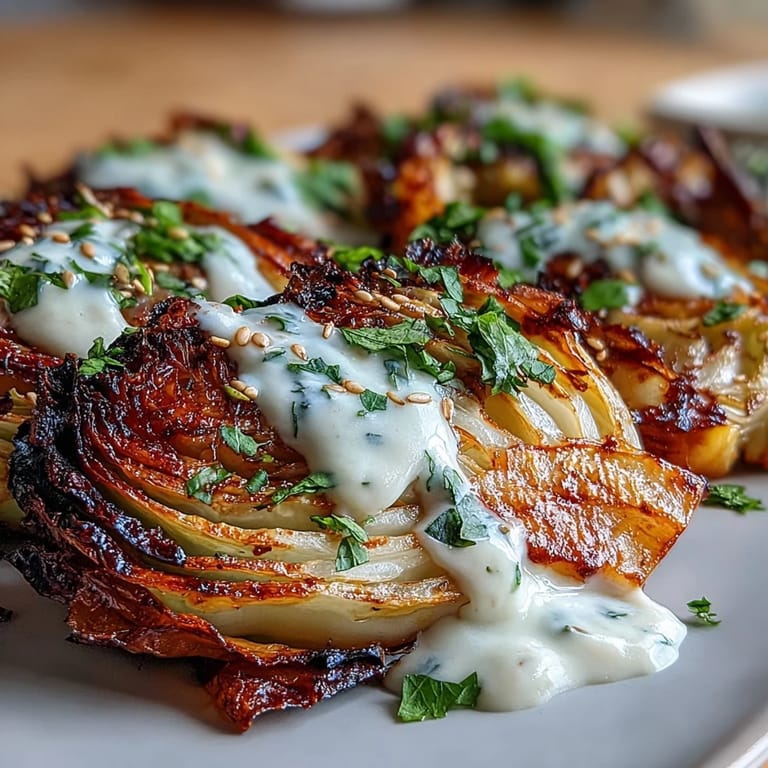
- Transfer the roasted cabbage to a serving platter, drizzle generously with that tahini sauce, then scatter sesame seeds, fresh herbs, and a little smoked paprika over the top. Serve it warm or at room temperature, both are equally delicious.
 Save
Save This dish transformed from a weeknight necessity into something I find myself planning dinner around, which is saying something for roasted cabbage. There's something deeply satisfying about turning something so humble into something so good that people ask for the recipe.
Why Tahini Is Your Secret Weapon
Tahini has this incredible ability to bridge flavors and make everything feel more luxurious without any fuss. When you whisk it with lemon and garlic, it becomes something that makes even plain roasted vegetables taste like you spent hours thinking about dinner. The sesame nuttiness pairs with roasted anything, which is why I keep tahini on hand now like it's a basic kitchen staple.
How to Make This Meal Feel Complete
On its own, this is a satisfying side or a light vegetarian main, but I've learned it's incredibly flexible depending on what else is happening at your table. Serve it alongside some warm grain or tuck it into pita with some fresh herbs and you've got something hearty enough for dinner. It also makes a stunning appetizer if you cut the wedges smaller and arrange them on a platter for guests to pick at.
Storage and Leftovers
Roasted cabbage keeps beautifully in the fridge for three days, and honestly tastes even better the next day once the flavors settle. The tahini sauce will thicken slightly as it sits, so whisk in a splash of water if you need to thin it before serving leftovers. I always make extra sauce because it's equally good on grain bowls, drizzled over roasted vegetables, or dolloped onto anything that needs richness and tang.
- Store roasted cabbage and tahini sauce in separate containers so the cabbage stays crispy instead of getting soggy.
- Reheat the cabbage in a 350°F oven for about 10 minutes to restore some of that crispness.
- Toast fresh sesame seeds right before serving since they lose their crunch once they've been sitting around.
 Save
Save This is the kind of recipe that reminds you that the best dishes are often the simplest ones, just treated with a little care and attention. Keep making it until people stop asking if they misheard the main ingredient.
Questions & Answers
- → How do I get the cabbage wedges to caramelize properly?
Preheat your oven thoroughly to 425°F and don't overcrowd the baking sheet. Arrange wedges cut-side down for better browning. Flip halfway through cooking and roast until edges are deeply golden and crispy—about 25-30 minutes total.
- → Can I prepare this dish ahead of time?
Roast the cabbage up to a day in advance and reheat at 350°F for 10 minutes. Make the tahini sauce fresh or store it separately in the refrigerator—the sauce will thicken in the fridge, so whisk in additional water before serving.
- → Why did my tahini sauce seize up?
This is normal when tahini meets acidic ingredients like lemon juice. Keep whisking vigorously and gradually add cold water, one tablespoon at a time, until the sauce emulsifies into a smooth, pourable consistency. Patience is key.
- → Can I use red cabbage instead of green?
Absolutely. Red cabbage works well here and adds vibrant color. Note that red cabbage may take 5-10 minutes longer to become tender. The natural sweetness pairs beautifully with the nutty tahini sauce.
- → What can I serve alongside these cabbage wedges?
They complement grilled chicken, lamb, or fish perfectly. For a vegetarian meal, pair with warm pita bread, rice, or quinoa. The dish also shines alongside other Middle Eastern favorites like hummus, falafel, or roasted eggplant.
- → How do I store leftovers?
Store roasted cabbage and tahini sauce separately in airtight containers in the refrigerator for up to 3 days. Reheat cabbage in a 350°F oven until warmed through. The sauce may need thinning with a splash of water after refrigeration.