 Save
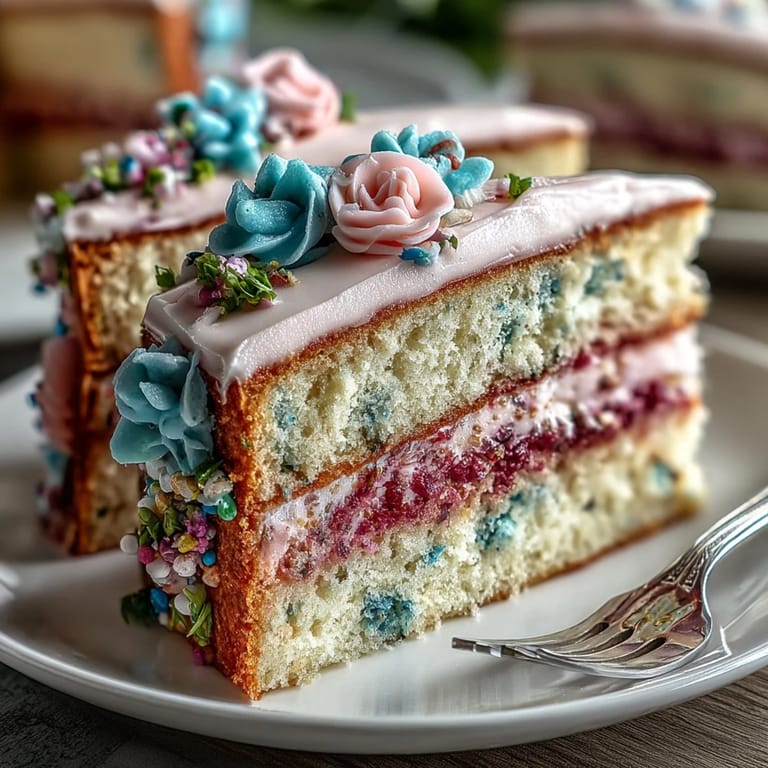
Save My sister called me three weeks before her birthday asking if I could bake something special, something that felt like spring itself on a plate. I'd never attempted a three-layer cake before, but there was something about the way she described wanting pastel flowers that made me want to try. That afternoon, I found myself standing in the kitchen with butter softening on the counter and this quiet determination to make something beautiful. It turned out that baking a cake with floral designs wasn't as intimidating as I'd imagined—it just required patience and a willingness to let buttercream teach me as I went.
When I finally set that finished cake on my sister's table, the afternoon light caught the pastel swirls just right, and everyone went quiet for a moment. That's when I understood—this cake wasn't just about flavor or technique, it was about showing up for someone with your hands and your effort. She cried a little, which tells you everything about what homemade really means.
Ingredients
- All-purpose flour: The foundation of a tender crumb; whisking it with baking powder and salt ensures even leavening throughout the layers.
- Baking powder: Don't skip sifting your dry ingredients together, as lumps will bake right into the cake and ruin the texture you're working toward.
- Unsalted butter for cake: Room temperature is non-negotiable here—cold butter won't cream properly with sugar, and you'll end up with a dense result instead of that light, airy structure.
- Granulated sugar: Beating it with butter aerates the mixture, which is where the cake gets its delicate crumb and tender bite.
- Room temperature eggs: Cold eggs won't incorporate smoothly into the batter, which means less lift and a tighter crumb; pull them from the fridge while you prep other ingredients.
- Vanilla extract: Pure vanilla makes a difference you can taste, especially in a recipe where vanilla is the star note.
- Whole milk: Also room temperature, which helps it combine seamlessly with the batter without temperature shock.
- Unsalted butter for buttercream: You need plenty of it here, and it must be soft enough to beat into a cloud without being greasy or melted.
- Powdered sugar: Sifting removes lumps before you even begin, saving you minutes of beating and ensuring smooth, lump-free frosting.
- Gel food coloring: Gel holds its intensity without adding moisture like liquid colors do, which keeps your buttercream's texture intact.
- Edible flower petals: Optional but worth seeking out—they catch light and add an authentic touch that makes the cake feel special.
Tired of Takeout? 🥡
Get 10 meals you can make faster than delivery arrives. Seriously.
One email. No spam. Unsubscribe anytime.
Instructions
- Prepare your stage:
- Preheat the oven to 350°F and grease three 8-inch round pans with butter or cooking spray, then line the bottoms with parchment paper circles. This double protection keeps your cakes from sticking and gives you a clean foundation to work with.
- Combine your dry foundation:
- Whisk flour, baking powder, and salt in a medium bowl until they're evenly distributed. This step is what prevents dense pockets in your finished cake, so take a moment and actually do it.
- Cream butter and sugar into gold:
- Beat softened butter with granulated sugar on medium-high speed for 3 to 4 minutes until the mixture is pale and fluffy. You'll know it's ready when it looks like whipped cream and has nearly doubled in volume—this aeration is what makes your cake light.
- Add eggs with care:
- Crack each egg directly into the mixture, beat for about 30 seconds after each addition, then add the next one. Adding them too quickly can cause the batter to curdle or separate, which disrupts the emulsion you've worked to create.
- Fold in flavor:
- Pour in the vanilla extract and beat just until combined, then alternate adding the flour mixture and milk, starting and ending with flour. This technique prevents overmixing, which would develop gluten and toughen your cake.
- Divide and distribute:
- Divide batter equally among the three prepared pans using a spatula or ice cream scoop, then gently smooth the tops so they'll bake evenly. Uneven surfaces lead to domed cakes, which is fine but means more trimming work later.
- Bake with patience:
- Bake for 25 to 30 minutes, checking at 25 by inserting a toothpick in the center—it should come out with just a few moist crumbs, not wet batter. Every oven runs differently, so trust your senses over the timer.
- Cool in stages:
- Let cakes rest in their pans for 10 minutes so they set slightly, then invert them onto wire racks to cool completely. Rushing this step risks breaking warm cake, so patience here pays off.
- Cream the buttercream base:
- Beat room temperature butter in a large bowl until it's pale and fluffy, about 2 minutes, then gradually add sifted powdered sugar a cup at a time. Gradual addition prevents powdered sugar clouds and ensures smooth, cohesive frosting.
- Add moisture and flavor:
- Drizzle in milk and vanilla extract, then beat for another 3 to 4 minutes until the buttercream is fluffy and spreadable. If it seems too soft, chill it briefly; if too stiff, add another splash of milk.
- Tint with intention:
- Divide buttercream into separate bowls and add gel food coloring drop by drop, stirring gently until you reach pastel tones. Gel coloring is potent, so a tiny amount goes a long way, and you can always add more.
- Layer with structure:
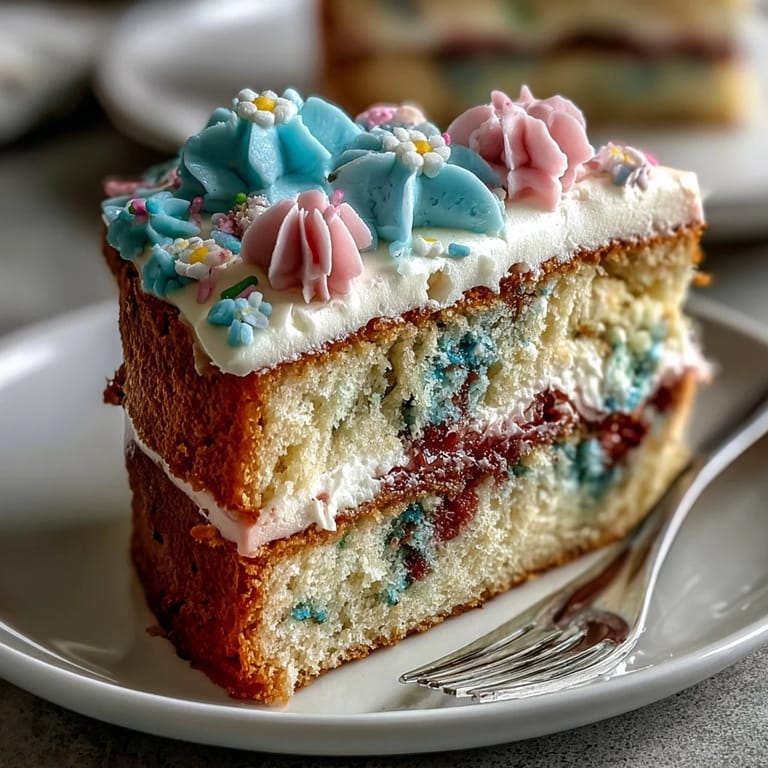
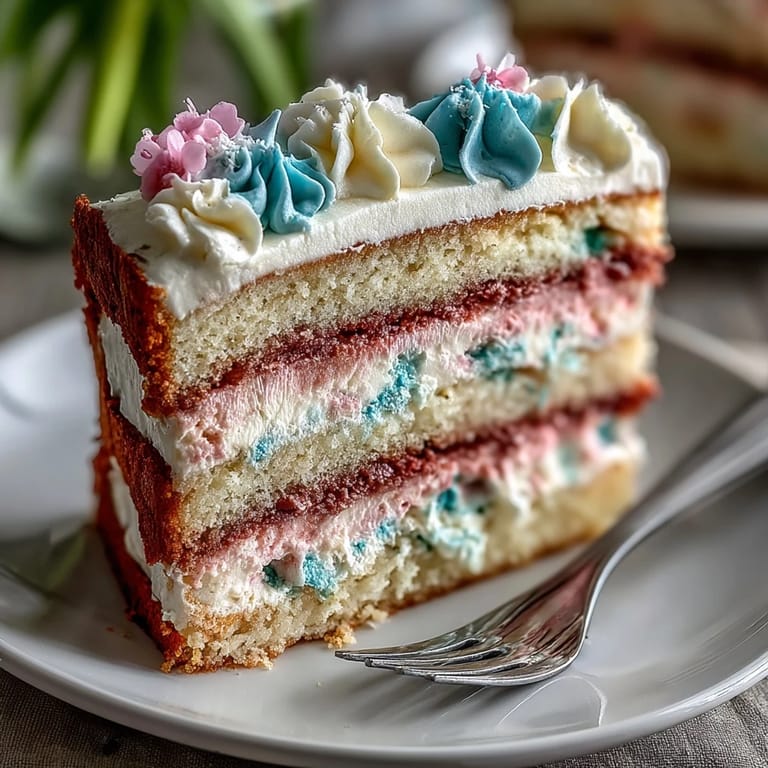
- Place the first cake layer on your serving plate, spread a thin but even layer of buttercream on top, then repeat with the second layer and buttercream, and finally top with the third cake layer. Having all three layers visible is part of the beauty here.
- Apply the base coat:
- Spread a thin layer of buttercream over the entire cake to seal in crumbs—this is called a crumb coat. Chill this for 20 minutes so when you add the decorative layers, loose crumbs won't ruin your design work.
- Decorate with flowers:
- Fill piping bags with tinted buttercream and different tips, then pipe floral designs across the chilled cake—swirls, dots, and petals all work beautifully. There's no wrong way here; homemade flowers feel charming because they're not factory-perfect.
- Final chill and serve:
- Refrigerate the finished cake for 15 to 20 minutes to set the buttercream, then slice and serve at cool room temperature for the best flavor and texture. Cold buttercream is a little firmer, but letting it sit for a few minutes brings out the vanilla.
 Save
Save That moment when your sister's eyes lit up taught me that baking is really about the generosity of time—the time you spend waiting for butter to soften, the time you take to get the colors just right, the time you invest in making something that's going to sit on a table and make people feel seen. This cake became the centerpiece of her celebration because every layer said something like, I spent hours on you.
The Vanilla Cake Secret
The magic of this cake lies in its simplicity, which is why every ingredient choice matters so much. I learned early on that a truly tender vanilla cake doesn't need chocolate or coffee or any distraction—it just needs butter, sugar, eggs, and vanilla treated with respect. The balance between wet and dry ingredients is what creates that fine crumb, and the aeration from creaming butter and sugar is what gives you that delicate lift.
Buttercream Beyond the Basics
Buttercream is surprisingly forgiving once you understand what it's doing—the ratio of butter to powdered sugar creates an emulsion that's naturally stable and spreadable. I've made it too soft by adding too much milk, and I've made it too stiff by being stingy, and both times I learned something about how temperature and moisture affect the final texture. The key is to add milk gradually while beating, watching how the mixture transforms from grainy to glossy to fluffy, and stopping when it reaches a consistency that feels right to you.
Decorating Without Fear
The decorating part feels more intimidating than it actually is, mostly because we've been conditioned to expect perfect fondant flowers and pristine piping. Pastel buttercream flowers, though, are meant to look soft and loose and a little bit like nature rather than perfection, which takes the pressure off completely. My first attempt was messy and uneven, but when I stepped back, it just looked homemade and cheerful in exactly the way birthday cakes should.
- Use offset spatulas to spread buttercream smoothly on the sides; they give you better control than regular spatulas.
- Piping tips don't need to be fancy—even a basic round tip and a leaf tip get you through most floral designs.
- Chilling between coats prevents buttercream from dragging or mixing, so take those 20-minute breaks seriously.
 Save
Save This cake has become my go-to for celebrations because it's simple enough to feel manageable but beautiful enough to make someone feel cherished. That's the whole point of baking, really—turning butter and sugar into a moment that matters.
Questions & Answers
- → What is the best way to achieve smooth pastel buttercream?
Beat the butter until creamy before gradually adding powdered sugar and milk. Thorough mixing ensures a fluffy, smooth texture. Use gel colors for vibrant pastel shades without thinning the frosting.
- → Can I use different vanilla extracts for varied flavor?
Absolutely. Lemon or almond extracts can be added to the batter for subtle flavor variations without overpowering the cake’s vanilla base.
- → How should I prepare the pans for even baking?
Grease and line the pans with parchment paper to prevent sticking and ensure even baking. This also makes removing the layers easier.
- → What is the purpose of the crumb coat?
The crumb coat seals in loose crumbs and creates a smooth surface for the final layer of buttercream and detailed floral decoration.
- → Are edible flower petals safe to use for decoration?
Yes, as long as they are specifically labeled edible. They add a natural and elegant touch to the floral buttercream design.
- → Can I make this cake ahead of time?
Yes, assemble and chill the cake to set the buttercream several hours in advance to allow flavors to meld and decorations to firm up.