 Save
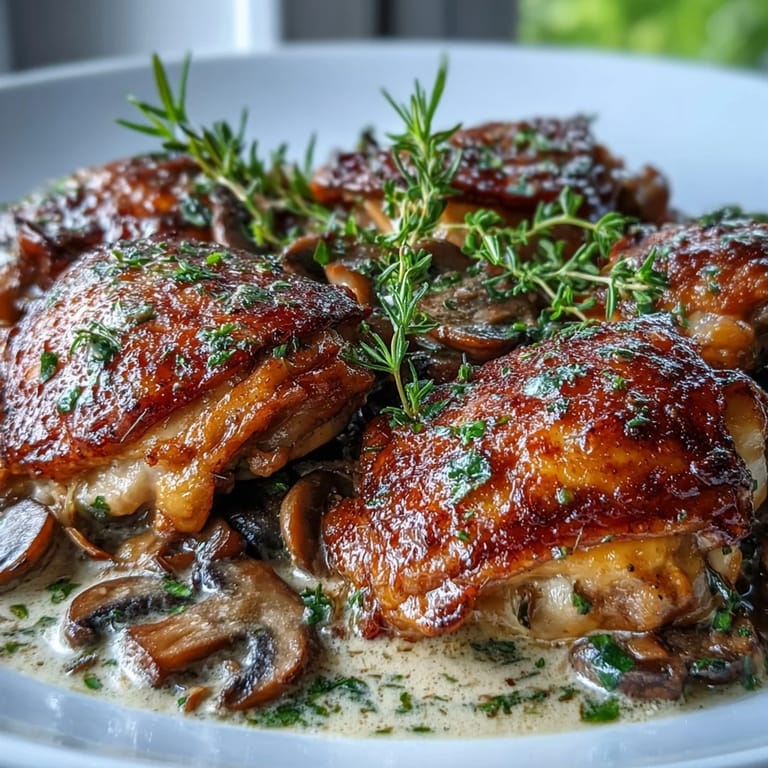
Save There was a bottle of rosé left over from a summer picnic, sitting in the fridge door for weeks. I'd been staring at it every morning, wondering what to do with wine that felt too delicate for anything serious. Then I remembered coq au vin, but lighter, softer, something that wouldn't weigh us down on a warm evening. The kitchen smelled like thyme and butter within minutes, and that pale pink sauce turned glossy and rich in a way I didn't expect.
I made this for my sister's birthday once, plating it over buttery fingerling potatoes with parsley scattered on top. She doesn't usually notice what's on her plate, but she stopped mid-conversation to ask what was in the sauce. That's when I knew the rosé wasn't just a substitute, it was the whole point.
Ingredients
- Bone-in, skin-on chicken pieces: Thighs and drumsticks stay juicy through the long braise and the skin crisps beautifully if you brown them well at the start.
- Dry rosé wine: Choose something you'd actually drink, nothing too sweet or it'll throw off the balance of the sauce.
- Olive oil: Use enough to get a good sear on the chicken, this is where the flavor foundation starts.
- Onion, garlic, carrots, leek: These aromatics melt into the sauce and give it body without needing a roux.
- Cremini or button mushrooms: Quartering them lets them hold their shape and soak up the wine without turning mushy.
- Tomato paste: Just a spoonful adds depth and a slight sweetness that rounds out the acidity of the wine.
- All-purpose flour: Optional, but it helps thicken the sauce if your wine is particularly thin.
- Heavy cream: This is what transforms the dish into something luxurious and smooth.
- Bay leaf, thyme, rosemary: Fresh herbs are worth it here, they perfume the whole pot as it simmers.
- Salt and black pepper: Season in layers, at the start and again at the end after the cream goes in.
- Fresh parsley: A handful chopped at the end brightens everything and cuts through the richness.
Tired of Takeout? 🥡
Get 10 meals you can make faster than delivery arrives. Seriously.
One email. No spam. Unsubscribe anytime.
Instructions
- Season and prep the chicken:
- Pat each piece completely dry with paper towels so the skin browns instead of steams. Season generously with salt and pepper on both sides.
- Brown the chicken:
- Heat olive oil in a large Dutch oven over medium-high heat until shimmering, then add chicken in batches without crowding. Let each side get deep golden brown, about 5 minutes per batch, then transfer to a plate.
- Cook the vegetables:
- In the same pot with all those browned bits, add onions, carrots, and leek, stirring occasionally until they soften and start to caramelize, about 4 to 5 minutes. Toss in mushrooms and cook another 3 minutes until they release their moisture.
- Add garlic and tomato paste:
- Stir in minced garlic and let it bloom for a minute, then add tomato paste and cook for another minute, stirring constantly. This step deepens the color and flavor.
- Thicken with flour:
- If you want a thicker sauce, sprinkle flour over the vegetables and stir to coat everything evenly. Cook for a minute to remove the raw flour taste.
- Deglaze with rosé:
- Pour in the rosé wine and scrape up all those caramelized bits stuck to the bottom of the pot with a wooden spoon. Nestle the browned chicken back in, add bay leaf, thyme, and rosemary.
- Simmer the chicken:
- Bring everything to a gentle simmer, cover the pot, and reduce heat to low. Let it cook for 45 minutes until the chicken is fork-tender and nearly falling off the bone.
- Finish with cream:
- Remove the herb sprigs and bay leaf, then stir in heavy cream. Simmer uncovered for 5 to 10 minutes until the sauce thickens slightly and turns glossy, then taste and adjust seasoning.
- Garnish and serve:
- Spoon chicken and sauce onto plates, scatter fresh parsley over the top, and serve immediately. It's perfect with crusty bread or buttered potatoes to soak up every drop.
 Save
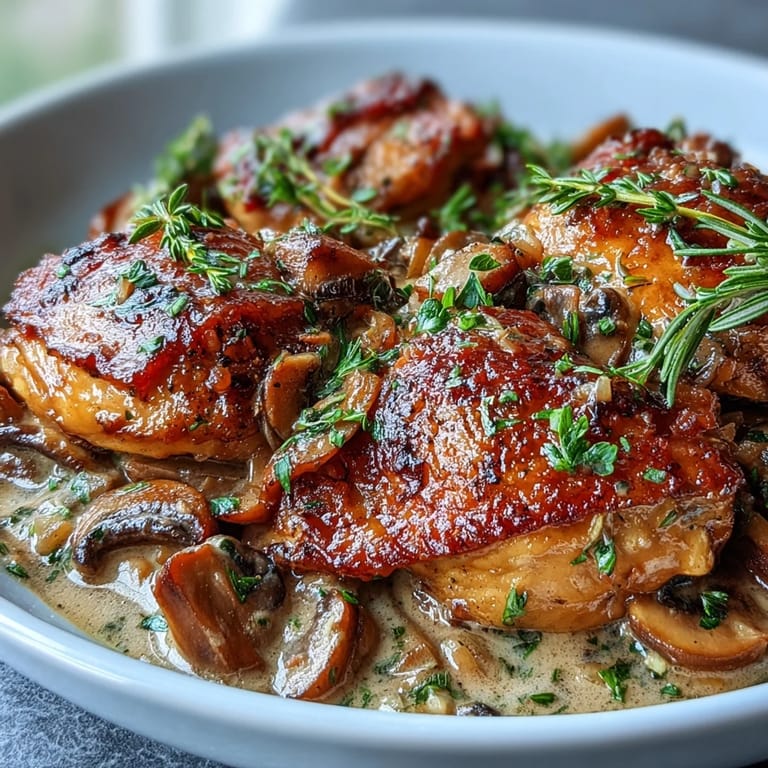
Save One night I served this with nothing but a baguette and a green salad, and we sat at the table longer than usual, soaking bread in the sauce and talking until the candles burned down. It's the kind of dish that slows time a little, makes you linger.
Serving Suggestions
I love this over buttered fingerling potatoes or egg noodles, but it's just as good with a pile of creamy mashed potatoes or even plain white rice to catch the sauce. A simple arugula salad with lemon vinaigrette on the side cuts through the richness perfectly. If you have any leftovers, the flavors deepen overnight and it reheats beautifully on the stovetop with a splash of stock.
Variations and Swaps
If you can't find rosé or want something deeper, a mix of half rosé and half chicken stock works wonderfully. For a lighter version, swap the heavy cream for crème fraîche or half-and-half, though the sauce won't be quite as velvety. I've also added a splash of cognac after browning the chicken for a richer, more traditional coq au vin feel. If you're gluten-free, just skip the flour and let the sauce reduce naturally, it'll still thicken from the vegetables and cream.
Storage and Reheating
Store leftovers in an airtight container in the fridge for up to three days. Reheat gently on the stovetop over low heat, adding a splash of stock or water if the sauce has thickened too much. The chicken stays tender and the flavors meld even more after a day or two.
- Don't microwave if you can avoid it, the cream can separate and the chicken dries out.
- You can freeze the dish without the cream, then stir it in fresh when you reheat.
- Always bring it back to a simmer slowly so the sauce stays smooth and glossy.
 Save
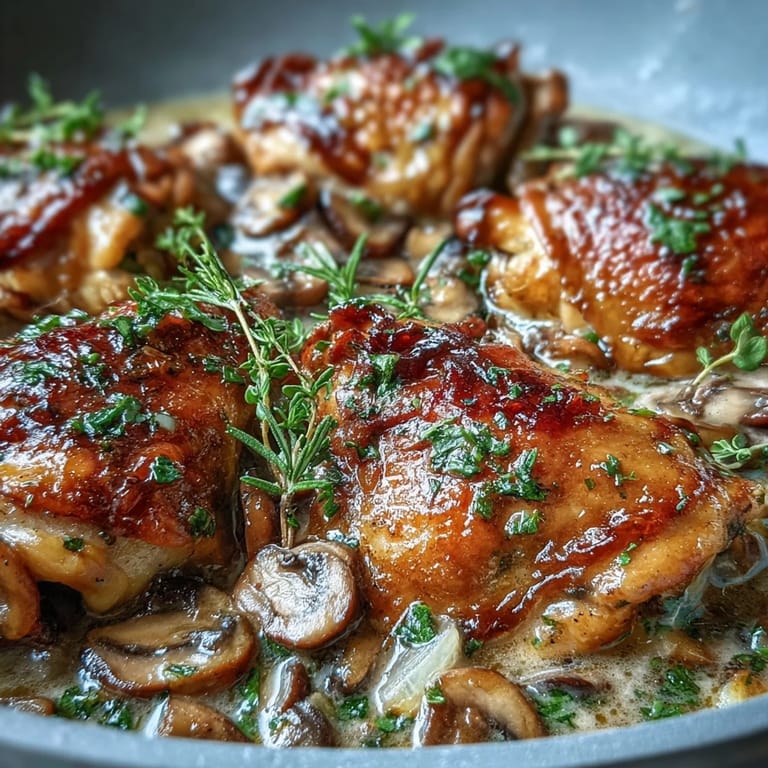
Save This dish has a way of making an ordinary evening feel special, like you planned something elegant all along. I hope it brings a little warmth and slowness to your table, too.
Questions & Answers
- → Can I use boneless chicken for this dish?
While you can use boneless chicken, bone-in pieces add more flavor and remain juicier during the long braising process. Thighs and drumsticks are recommended for best results.
- → What type of rosé wine should I use?
Choose a dry rosé wine for cooking. Avoid sweet or sparkling varieties. A good rule is to use a wine you would enjoy drinking, as the flavor concentrates during cooking.
- → Can I make this dish ahead of time?
Yes, this dish actually improves when made a day ahead. The flavors meld together beautifully. Simply reheat gently on the stovetop before serving, adding a splash of wine or stock if needed.
- → How do I thicken the sauce if it's too thin?
Simmer the sauce uncovered for a few extra minutes to reduce it naturally. Alternatively, mix a small amount of flour with butter to create a paste and whisk it into the simmering sauce.
- → What can I substitute for heavy cream?
You can use half-and-half for a lighter version, or crème fraîche for a tangy richness. Coconut cream works for a dairy-free option, though it will alter the traditional flavor slightly.
- → Can I add other vegetables to this dish?
Absolutely! Pearl onions, celery, or parsnips work wonderfully. Add heartier vegetables at the beginning with the carrots, and more delicate ones like peas during the last few minutes of cooking.