 Save
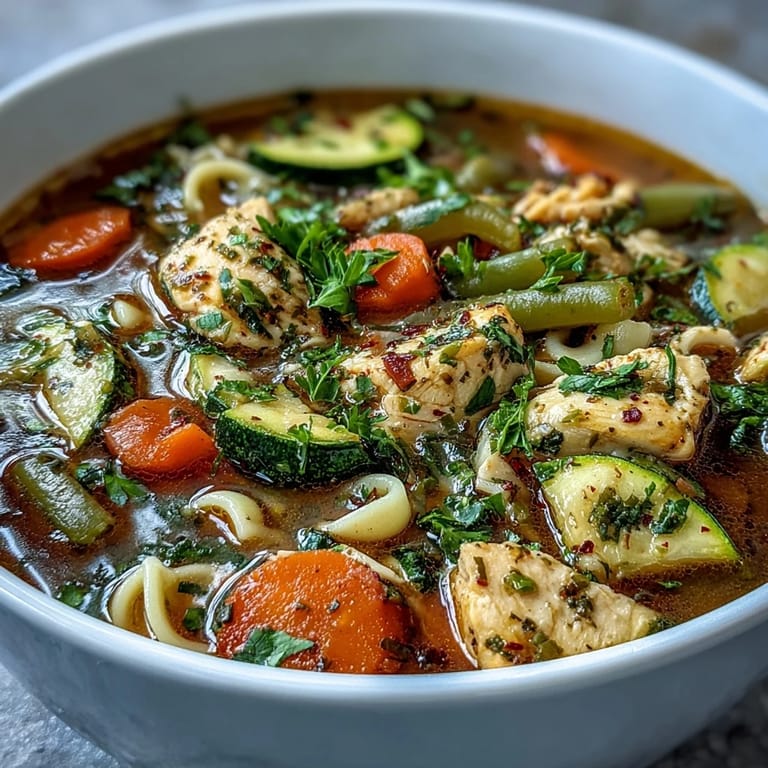
Save I used to think soup was just for sick days until a rainy Tuesday changed my mind. The wind was rattling the windowpane and the kitchen felt unusually chilly. I gathered whatever was in the crisper drawer and started chopping. The steam rising from the pot eventually fogged up my glasses and filled the room with warmth. It turned a dreary afternoon into something cozy and intentional.
My youngest sibling used to pick out the green beans until I started cutting them into tiny rounds. Now they ask for double beans because they look like little green coins. We usually sit around the island while the broth simmers and talk about nothing in particular. Those slow minutes while the pasta softens are some of my favorite parts of the week. It is a dish that demands you slow down and enjoy the steam.
Ingredients
- Chicken Breasts: These stay tender and soak up the broth flavor if you cube them evenly.
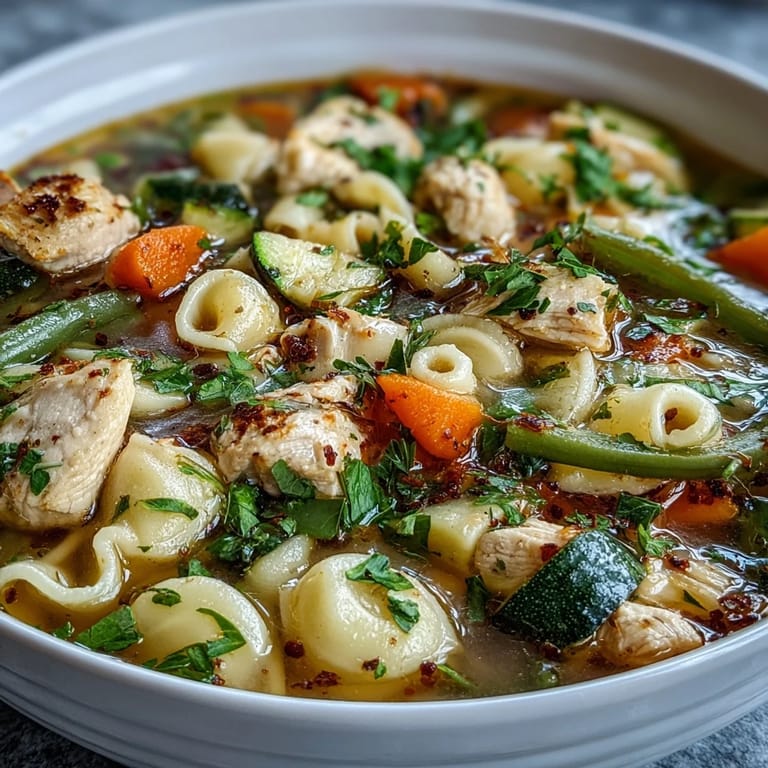
- Small Pasta Shapes: Ditalini or elbows are best because they fit perfectly on a soup spoon.
- Fresh Zucchini: This adds a soft texture that melts into the broth just enough.
- Low Sodium Chicken Broth: Using a lower salt base lets you control the seasoning exactly as you like it.
- Dried Thyme and Basil: These herbs create that classic kitchen smell that brings everyone to the table.
- Diced Tomatoes: The juices from the can give the broth a beautiful golden hue and subtle tang.
Tired of Takeout? 🥡
Get 10 meals you can make faster than delivery arrives. Seriously.
One email. No spam. Unsubscribe anytime.
Instructions
- The Foundation:
- Saute the onion, carrots, and celery in oil until they are soft and fragrant. You want them to release their sweetness without browning too much.
- Garlic and Chicken:
- Toss in the garlic for a minute before browning the chicken cubes lightly. The chicken does not need to be cooked through yet as it will finish in the broth.
- Building the Broth:
- Stir in the zucchini, beans, tomatoes, and herbs before pouring in the golden broth. Take a moment to inhale the aroma as the herbs hit the hot vegetables.
- The Big Simmer:
- Let everything bubble gently under a lid for fifteen minutes to marry the flavors. This is when the kitchen starts to feel like a home.
- Pasta and Peas:
- Drop in the pasta and peas and cook uncovered until the pasta is perfectly tender. The peas only need a few minutes to reach their bright green peak.
- The Finishing Touch:
- Fish out the bay leaf and stir in fresh parsley for a burst of color. Give it a final taste to see if it needs a pinch more salt or pepper.
 Save
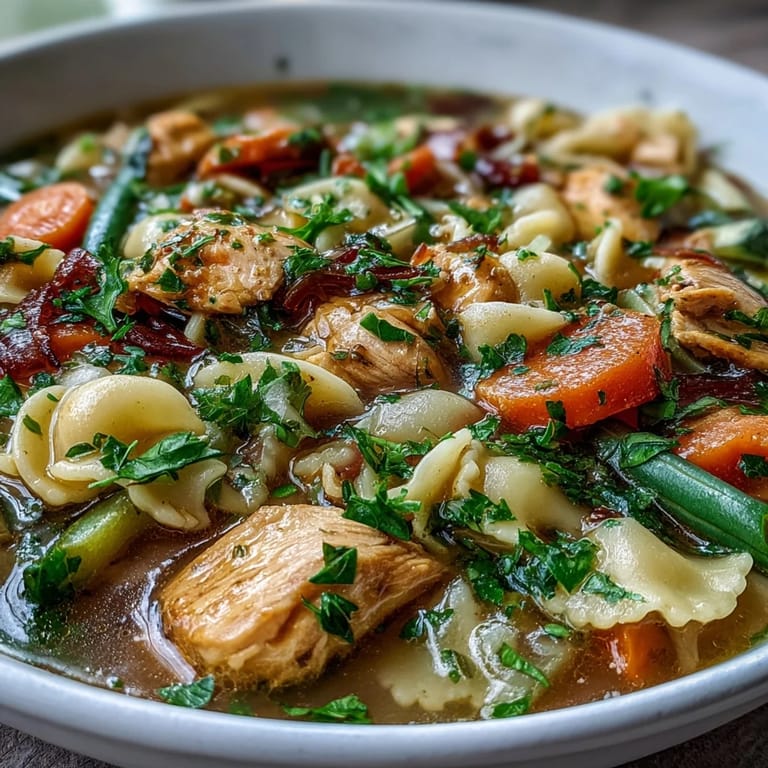
Save I remember bringing a thermos of this to a football game last autumn. While everyone else was shivering and eating cold sandwiches we had steaming cups of chicken and pasta. The broth stayed hot enough to warm our hands through our gloves. It was the first time I realized how portable and life saving a good soup can be.
The Magic of Leftovers
This soup actually tastes even better the next day after the herbs have spent more time together. If the pasta drinks up too much liquid, just splash in a little extra broth when reheating. It makes the most reliable office lunch you could ask for. I often find myself looking forward to Monday just for the leftovers.
Seasonal Variations
You can easily swap the vegetables based on what is growing or on sale at the market. In the spring I like to add asparagus tips or even a handful of spinach at the end. During the winter months some cubed butternut squash adds a lovely sweetness. The base is forgiving enough to handle almost any vegetable you have on hand.
Serving and Storage
A bowl of this is great on its own but a piece of crusty bread is the best tool for catching every drop. I like to grate a little bit of fresh parmesan right over the top before serving. It adds a salty kick that balances the sweet carrots and tomatoes perfectly.
- Store the soup in airtight containers for up to three days.
- Freeze the base without the pasta if you plan on making a massive batch.
- Always check the seasoning one last time before the soup hits the table.
 Save
Save I hope this bowl brings as much comfort to your kitchen as it does to mine. Happy cooking and enjoy every warm spoonful.
Questions & Answers
- → Can I make this soup ahead of time?
Yes, prepare the soup up to 2 days in advance and store in the refrigerator. Add the pasta when reheating to prevent it from becoming too soft, as pasta continues absorbing liquid while stored.
- → What pasta shapes work best?
Small shapes like ditalini, elbow macaroni, orzo, small shells, or tubetti are ideal. Their size fits well on soup spoons and holds up nicely during simmering without becoming mushy.
- → Can I use rotisserie chicken instead?
Absolutely. Use shredded rotisserie chicken and add it during the last 5 minutes of cooking with the pasta and peas. This shortcut adds extra depth and reduces prep time significantly.
- → How do I store leftovers?
Cool completely and transfer to airtight containers. Refrigerate for up to 3 days or freeze for up to 3 months. The pasta will absorb more liquid, so add extra broth when reheating.
- → What vegetables can I substitute?
Swap zucchini for spinach or kale, replace green beans with corn or bell peppers, or add diced potatoes during the initial simmer. The vegetable medley is flexible based on seasonal availability.