 Save
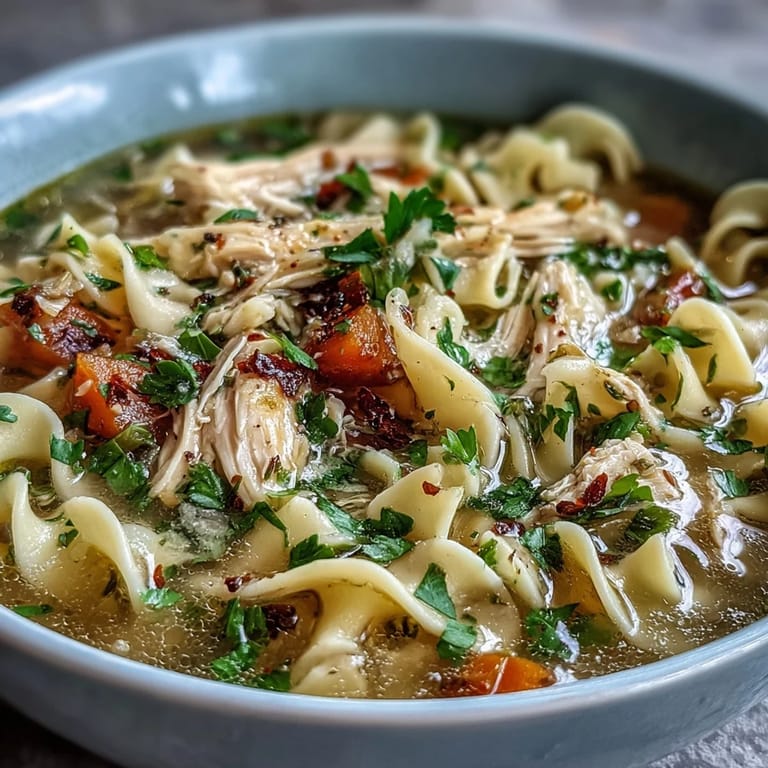
Save The steam from a simmering pot of chicken soup always reminds me of the rainy Tuesday when I lost my favorite umbrella. I stood in the kitchen shivering while the scent of thyme and rosemary slowly filled the room. It was the first time I realized how much a simple broth could actually change a mood. This recipe is the result of many wet afternoons spent trying to replicate that specific feeling of safety. It is not just about the food but about the warmth it provides.
I once accidentally added way too much lemon juice and thought the whole batch was ruined. My brother ended up loving the extra zing and insisted it was the secret to a great soup. Now I always add that splash of citrus right at the end to brighten the heavy savory notes. It taught me that kitchen mistakes are often just new versions of a classic waiting to be discovered. Watching the noodles swirl in the golden liquid is still one of my favorite sights.
Ingredients
- Chicken: Bone in thighs are my secret for the juiciest meat and the richest soup base.
- Chicken broth: Low sodium is best so you can control the saltiness as it reduces.
- Vegetables: Dicing the onion carrots and celery into uniform sizes ensures every bite is perfectly balanced.
- Fresh garlic: Smashing the cloves before mincing releases more of the aromatic oils into the pot.
- Herbs: Dried thyme and rosemary are classic for a reason because they hold up well during the long simmer.
- Egg noodles: The wide variety holds onto the broth beautifully and adds a satisfying heartiness.
- Lemon juice: A tiny bit of acid cuts through the richness and makes the whole pot taste fresh.
Tired of Takeout? 🥡
Get 10 meals you can make faster than delivery arrives. Seriously.
One email. No spam. Unsubscribe anytime.
Instructions
- Start the base:
- Listen for the gentle bubbling as you bring the chicken and broth together in your favorite heavy pot. Skim off any foam that rises to the surface to keep the liquid clear.
- Layer the aromatics:
- Drop in your vegetables and herbs and let the kitchen fill with that unmistakable homey fragrance. Lower the heat so everything can simmer quietly for about 30 minutes.
- Shred the meat:
- Lift the tender chicken out and use two forks to pull it into chunky pieces that will catch the broth. Return the shredded meat to the pot and bring it back to a soft boil.
- Cook the noodles:
- Toss the egg noodles into the simmering liquid and watch them soften into pale golden ribbons. They usually take about 10 minutes to reach the perfect texture.
- Add the finish:
- Stir in the parsley and lemon while the soup is still steaming to wake up all the flavors. Remember to pull out the bay leaves before you start ladling it into bowls.
 Save
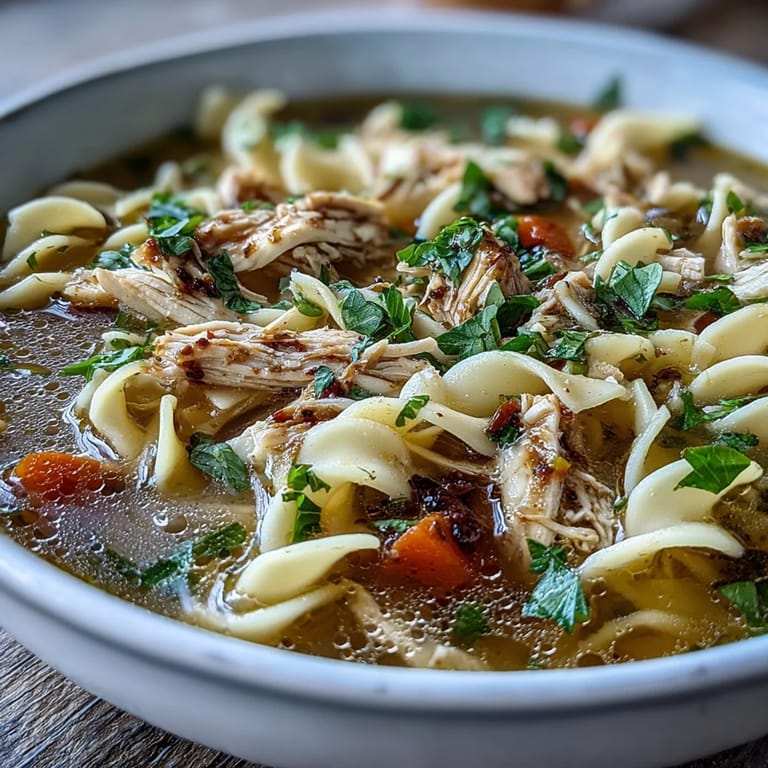
Save My grandmother used to say a soup is only as good as the patience of the person stirring it. I remember leaning against her counter as she carefully removed every tiny bone with such focus. It felt like a meditation on care and nourishment. Now when I do it I feel that same sense of quiet purpose in my own kitchen. Every bowl I serve feels like an extension of that afternoon.
The Magic of the Simmer
Letting the chicken cook on the bone is what transforms thin liquid into a velvety and soul warming broth. You will see the color change from pale to a rich gold as the marrow and fats meld with the vegetables. It is tempting to rush this part but the slow heat is what really tenderizes the meat.
Choosing the Right Noodles
Egg noodles are traditional because they have a slight chew and a rich flavor that stands up to the savory broth. If you find they soak up too much liquid you can always add a splash more broth when reheating. I prefer the extra wide ones because they feel more substantial and comforting during a long winter evening.
Serving and Storage
This soup is best enjoyed with a big piece of crusty bread that can soak up every last drop of the liquid. If you have leftovers the noodles will continue to soften so keep that in mind when planning your meals. Here are a few ways to make the most of every single bowl.
- Keep the noodles separate if you plan on freezing the soup for later use.
- Add a handful of fresh spinach at the end for a pop of color and extra vitamins.
- Check the salt level after the noodles have cooked since they can absorb quite a bit of seasoning.
 Save
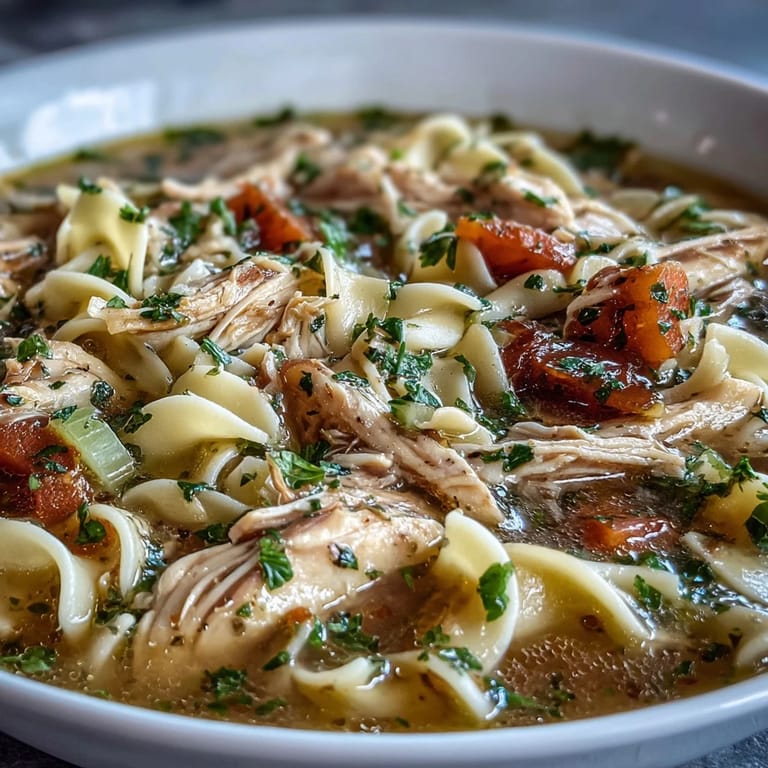
Save This bowl is a warm hug for your soul on any day that feels a bit too heavy. I hope it brings as much comfort to your table as it has to mine.
Questions & Answers
- → Can I make this ahead of time?
Absolutely. The flavors actually deepen overnight. Prepare everything and store in the refrigerator for up to 3 days. Add noodles when reheating to prevent them from becoming too soft.
- → What's the best chicken cut to use?
Bone-in, skinless thighs provide the richest flavor and remain moist during simmering. Breasts work too but may dry out slightly. A combination of both gives you the best of both worlds.
- → Can I freeze this soup?
Yes, but leave out the noodles if freezing. The broth, chicken, and vegetables freeze beautifully for up to 3 months. Add fresh noodles when reheating for the best texture.
- → How do I make it gluten-free?
Simply substitute the egg noodles with your favorite gluten-free pasta variety. Rice noodles or quinoa pasta work particularly well and maintain their texture nicely in hot broth.
- → What can I add for extra flavor?
A splash of lemon juice brightens everything right before serving. Fresh herbs like parsley or dill add brightness. For depth, try a Parmesan rind while simmering or finish with a drizzle of good olive oil.
- → Why do you remove the chicken to shred it?
Removing the chicken lets you check that it's fully cooked and shred it evenly without breaking apart the vegetables. This method also makes it easier to discard bones and skin before returning the meat to the pot.