 Save
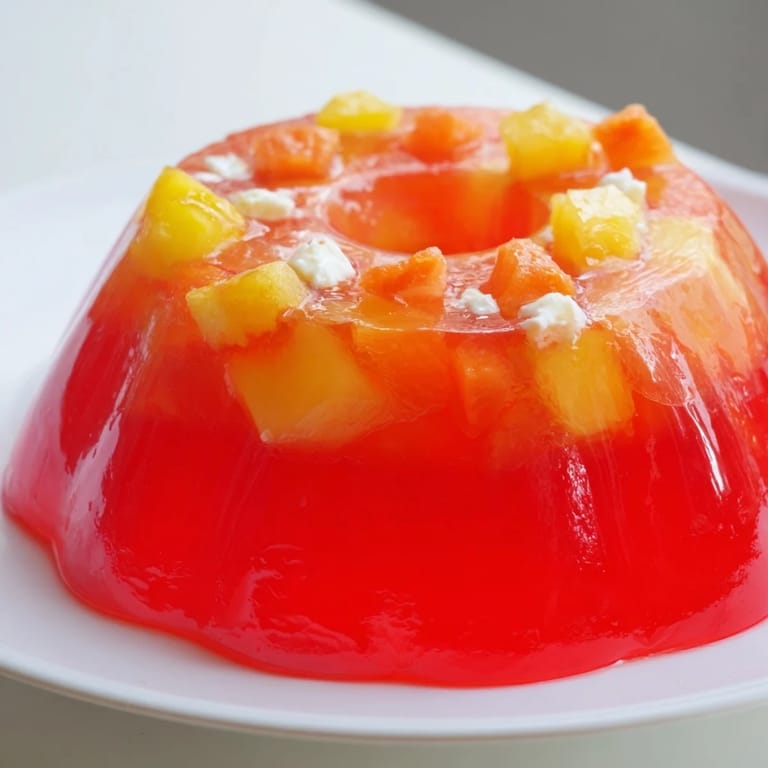
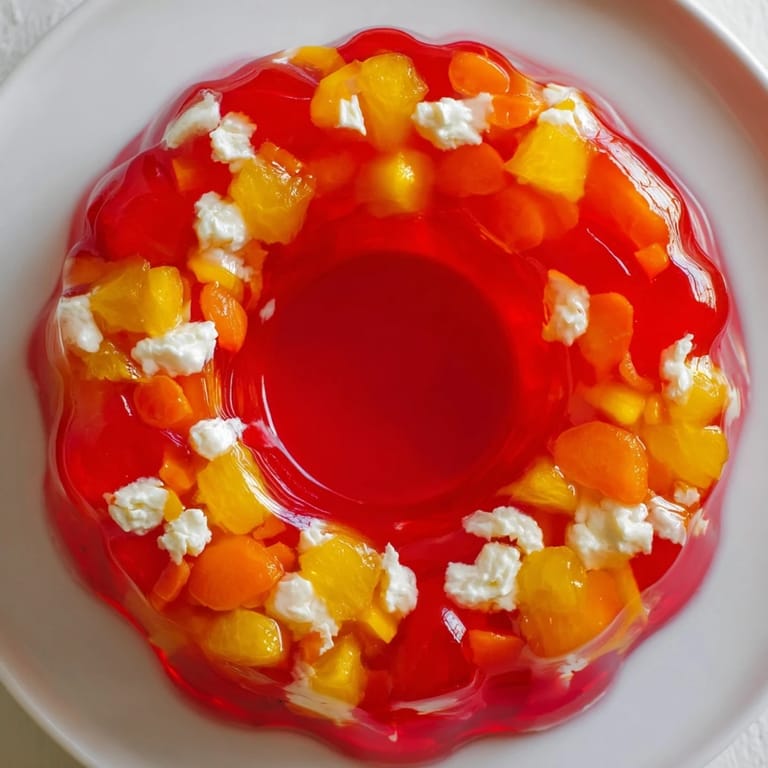
Save My grandmother used to arrive at church socials with a shimmering dome of Jell-O salad cradled carefully in her hands, and I remember the nervous energy of watching it jiggle slightly as she walked. There was something magical about that jewel-toned mold—strawberry red or sunshine orange—studded with fruit like tiny treasures suspended in time. She made it look effortless, but I later discovered the real magic was in understanding how to coax gelatin into releasing cleanly from its mold and why certain fruits played better with others. This recipe became my own tradition after I realized it's less about perfection and more about creating something beautiful that brings people together.
I once made this for a potluck during a bitterly cold February, and watching people's faces light up when they spotted the glossy, jewel-like mold made the three-hour wait worthwhile. One guest—a woman I'd never met before—asked if I'd made it from scratch, and when I said yes, she told me it reminded her of her mother's kitchen in 1982. That's when I understood: this isn't just a recipe, it's a time machine on a plate.
Ingredients
- Flavored gelatin (strawberry or orange, 2 packages): These are your foundation and color source—don't skip the flavor that speaks to you, and measure the boiling water carefully because too much will prevent proper setting.
- Boiling water (2 cups) and cold water (1 cup): The temperature contrast is crucial; the boiling water dissolves the gelatin completely while the cold water stops the cooking process and brings everything to the right consistency for adding solids.
- Crushed pineapple (1 cup, well-drained): Drain it thoroughly or your salad will weep liquid and never fully set—I learned this the hard way.
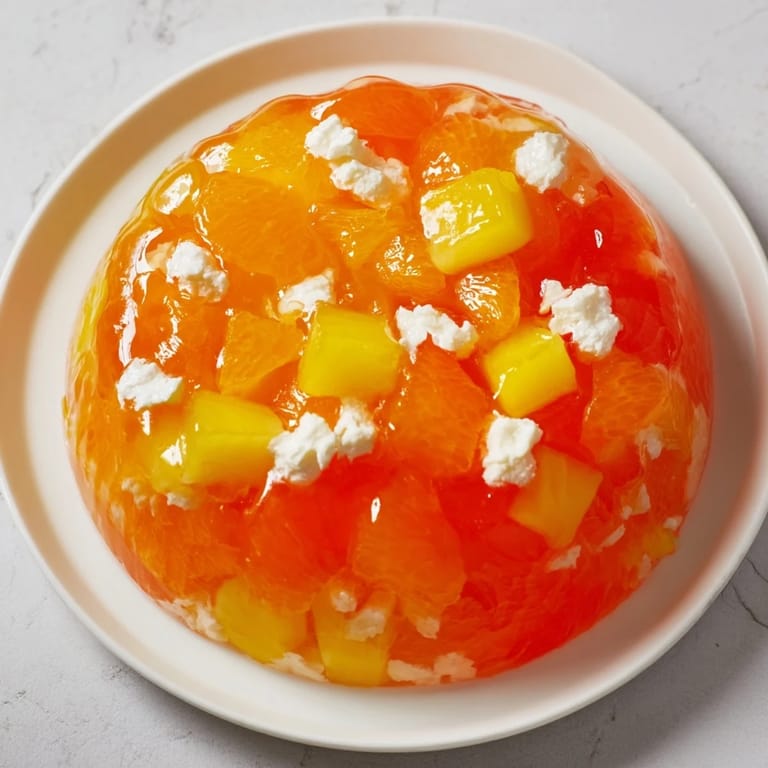
- Canned mandarin orange segments (1 cup, drained): Fresh citrus enzymes will prevent setting, so stick with canned; the sweetness balances the creamy tang perfectly.
- Grated carrots (1 cup): They add earthiness, color contrast, and a subtle texture that makes each bite interesting.
- Small-curd cottage cheese (1 cup): This is your secret weapon for creaminess; the small curds blend more smoothly than large ones, and it adds protein that makes this feel less like pure sugar and more like an actual dish.
- Chopped walnuts (1/2 cup, optional): They add a welcome crunch and richness, but honestly, the salad stands perfectly fine without them.
Tired of Takeout? 🥡
Get 10 meals you can make faster than delivery arrives. Seriously.
One email. No spam. Unsubscribe anytime.
Instructions
- Dissolve the gelatin:
- Pour the boiling water over the gelatin packets in your largest bowl and stir steadily for about two minutes until every speck dissolves—you'll feel the resistance melt away as the heat does its work. This moment matters because any undissolved gelatin will create grainy pockets later.
- Cool it down:
- Stir in the cold water and then let the whole thing sit at room temperature for about 20 minutes, which is the perfect time to prep your fruit and cottage cheese. You want the gelatin to be cool to the touch but still liquid enough to combine smoothly with everything else.
- Build your layers:
- Add the drained pineapple, oranges, carrots, cottage cheese, and walnuts if using, stirring gently to distribute everything evenly. The mixture should look vibrant and slightly speckled, not uniform.
- Set it in the mold:
- Pour everything into your mold (a 6-cup capacity is perfect) and smooth the top with a spatula—this is pure aesthetics since no one sees the top anyway, but it feels nice. Cover it with plastic wrap and slide it into the coldest part of your refrigerator for at least three hours, preferably overnight.
- The dramatic unmold:
- Dip the outside of the mold briefly in warm water (not hot, or you'll melt the edges unevenly) and run a thin knife around the inside edge if it seems stubborn. Invert it onto your serving platter in one confident motion—hesitation is your enemy here.
 Save
Save I brought this to a work gathering once when everyone was stressed about a big project, and I watched it become an unlikely point of lightness in the room—people smiled, told stories about their families' versions, and for a moment, we were all connected to something simpler. That's the real power of this recipe.
Flavor Variations That Work
The beauty of this recipe is how forgiving it is when you want to experiment. Lime gelatin with pears and pecans creates a sophisticated green version that feels elegant without trying too hard, while raspberry with blackberries and almonds tastes almost luxurious. I've even seen people use lemon gelatin with shredded apple and no carrots for a brighter, crisper take on the classic. The ratio stays the same; only the colors and companion flavors change, so feel free to trust your instincts.
The Secret to a Clean Unmold
The unmolding moment is where this recipe either becomes your triumph or your humbling lesson. The water temperature is absolutely critical—too hot and your beautiful gelatin starts to sweat and slide off the sides, but too lukewarm and it refuses to release at all. I've learned to do a quick test with a thin metal knife around the edge first, and if it's truly stuck, I repeat the warm water dip rather than forcing it.
Serving, Storage, and Nostalgic Touches
Serve this chilled, ideally within a day or two of making it, though it keeps for up to four days covered in the refrigerator. For maximum vintage presentation, dust the platter with a tiny bit of powdered sugar around the base, add a dollop of whipped cream to each slice, and watch people immediately transport back to their own childhoods. A small cherry or mint leaf on top turns it from potluck fare into something that looks deliberately elegant.
- If you're making this ahead, unmold it just before serving to prevent it from drying out or absorbing fridge odors.
- For a lighter version, use low-fat cottage cheese and it tastes almost identical, just slightly less rich.
- Remember that gelatin holds moisture like a sponge, so don't leave it sitting at room temperature for more than an hour before serving.
 Save
Save This recipe is comfort wrapped in gelatin and nostalgia in a mold—it belongs on your table whenever you want to make people smile. Make it exactly as written once, and then trust yourself to make it your own.
Questions & Answers
- → How do I ensure the gelatin sets properly?
Dissolve the gelatin completely in boiling water and allow the mixture to cool to room temperature before adding fruits and cottage cheese. Then refrigerate for at least 3 hours to ensure firm setting.
- → Can I substitute walnuts with other nuts?
Yes, pecans or other tree nuts can be used instead of walnuts, or omit nuts entirely for a nut-free version.
- → What is the best way to unmold the gelatin salad?
Briefly dip the mold in warm water to loosen edges, then invert onto a serving platter for clean release.
- → How can I make a lighter version of this dish?
Use low-fat or reduced-fat cottage cheese to decrease richness without affecting texture significantly.
- → Are there variations using different gelatin flavors?
Yes, lime gelatin with pears instead of mandarin oranges offers a classic green variation with a fresh twist.